Meet Jared — and the Cease and Desist That Named Him
So I posted a dinosaur skull on Instagram, and someone sent me a legal threat.
Not exactly how I expected that week to go, but here we are.
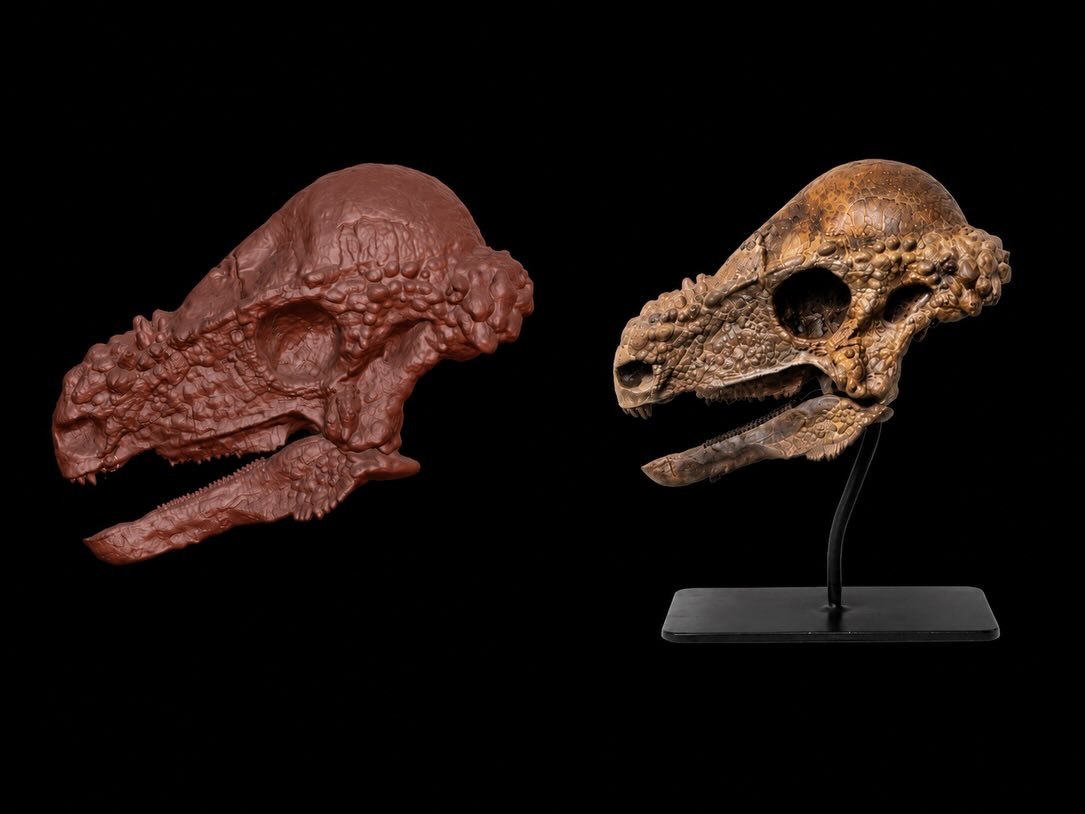
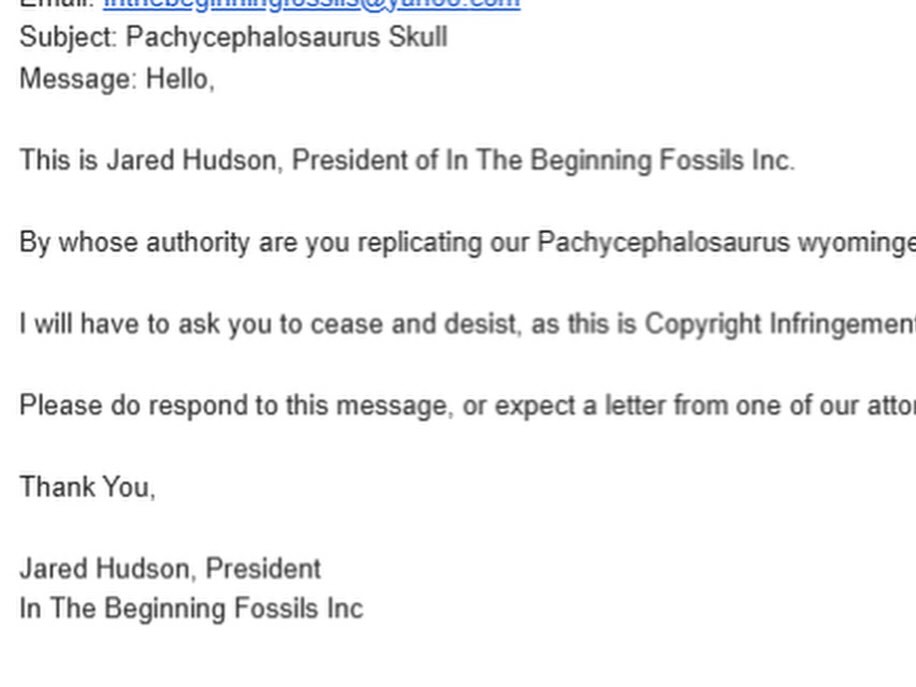
The skull in question is my new Pachycephalosaurus wyomingensis. I based it on the remarkable specimen that sold at Sotheby’s, and I was pretty happy with how the early renders were coming together. Posted the work-in-progress, went to check my messages, and found an email sitting in my inbox from someone named Jared Hudson, President of a company called In The Beginning Fossils Inc.
The subject line: “Pachycephalosaurus Skull.”
The message: a demand to cease and desist, on the grounds that I was committing copyright infringement by replicating their Pachycephalosaurus.
I’ll be honest — I laughed. Then I read it again. Then I laughed a bit more.
And then I named the skull Jared. After him.
Here’s the thing. You cannot copyright a dinosaur. You cannot own the anatomy of an animal that went extinct 66 million years ago. If someone digs up a fossil, they own that rock. If they photograph it, they own that specific photo. But the biological shape of the animal — the structure that nature spent millions of years building — that’s not anyone’s intellectual property. It belongs to the fossil record. It belongs to science. It belongs to everyone.
My process has nothing to do with scanning or copying anyone’s files. I work from reference material, scientific papers, and published photographs. I study the anatomy and sculpt everything from scratch. That’s how it’s always been done in paleoart, and it’s how I do it. So the idea that recreating the shape of a Pachycephalosaurus skull — an animal that died before humans even existed — constitutes copyright infringement is, to put it gently, not how copyright law works.
Anyway. Jared got finished.
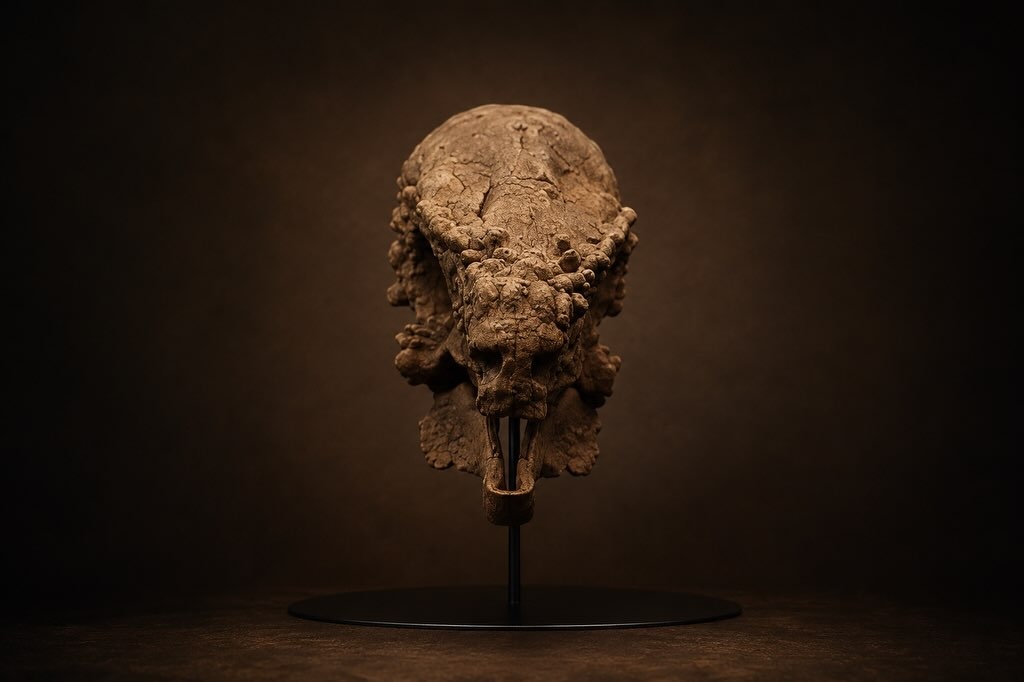
Two weeks after that first post, the final renders were done. The main structure was already solid from the start, but the second half of this project was all about the details — surface texture, the small asymmetries you see in real bone, the cracks, the ornamentation. That’s where a skull goes from looking like a decent model to actually feeling like something that was once alive.
Pachycephalosaurus gets a lot of attention for the dome. Understandably so — it’s massive, it’s covered in bony knobs and spikes, and it looks like the animal was built specifically to headbutt things. Scientists still debate exactly what the dome was for. Combat is the obvious guess, but display, species recognition, and a mix of all three are all on the table. The honest answer is we don’t fully know yet.
What people tend to overlook is everything around the dome. The compact snout. The texture of the bone surface. The proportions around the eye socket. The overall character of the skull — that strange combination of brutish and almost comical that makes Pachycephalosaurus one of the most recognizable dinosaurs out there. Complete skulls are genuinely rare, which is part of what made the Sotheby’s specimen such a useful reference. It’s one of the better-preserved examples of what this animal actually looked like.
So that’s Jared. Named after the man who tried to stop him, finished despite it, and honestly better for the whole ridiculous experience.
Thick skull. Worse attitude than the person who sent that email.
If you want one for your own collection, reach out to one of my licensed vendors — links are on the website.