

Why Nova Studios? Let Me Show You the Difference.
Look, I get it. There are a lot of 3D printed dinosaur skeletons out there. So why pick mine? Fair question. Instead of throwing a bunch of marketing talk at you, let me just show you what I mean.
The thing that bugs me
I recently came across a resin print from another seller, and honestly? It’s the kind of stuff that gives 3D printing a bad name. Support blips everywhere. You know those little bumps and rough spots left behind when someone rips the supports off and calls it done? Yeah, those. All over the surface. No cleanup, no sanding, no care. Just… here’s your model, good luck.
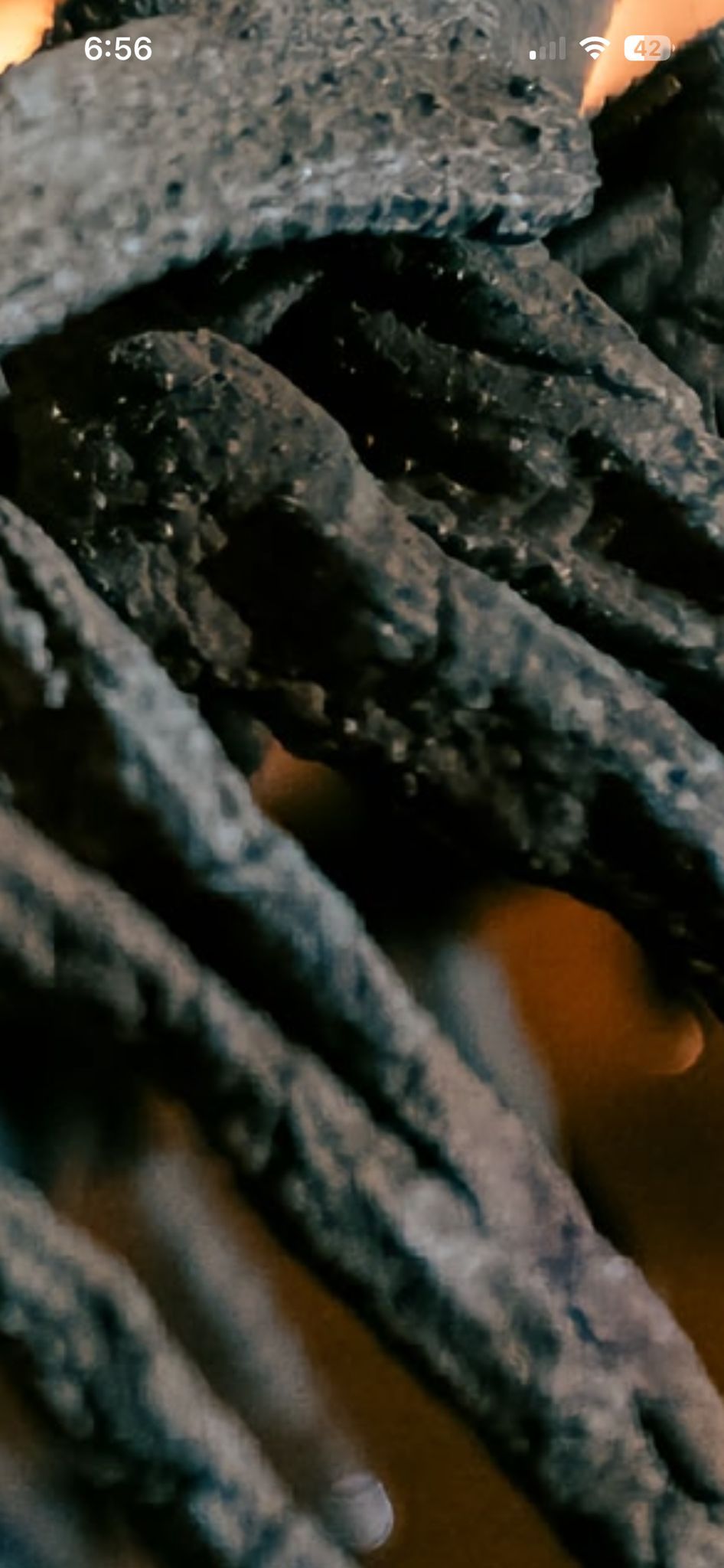
A close-up of a competitor’s resin print. Notice the rough, bumpy texture across the ribs — those are support contact points that were never cleaned up. This is what gets sold as a “finished” product.
And look, I’ve been there. When I first started printing, my results were rough too. Filament jams, failed prints, supports fused to surfaces — the whole mess. But that was me learning. That wasn’t me selling a finished product to someone.
What I do differently
Every model I sculpt starts with research. Actual research. I dig through paleontological papers, study fossil anatomy, and spend way too many hours making sure a vertebra looks like that vertebra and not just “a bone shape.” I’m a bit obsessive about it, honestly.
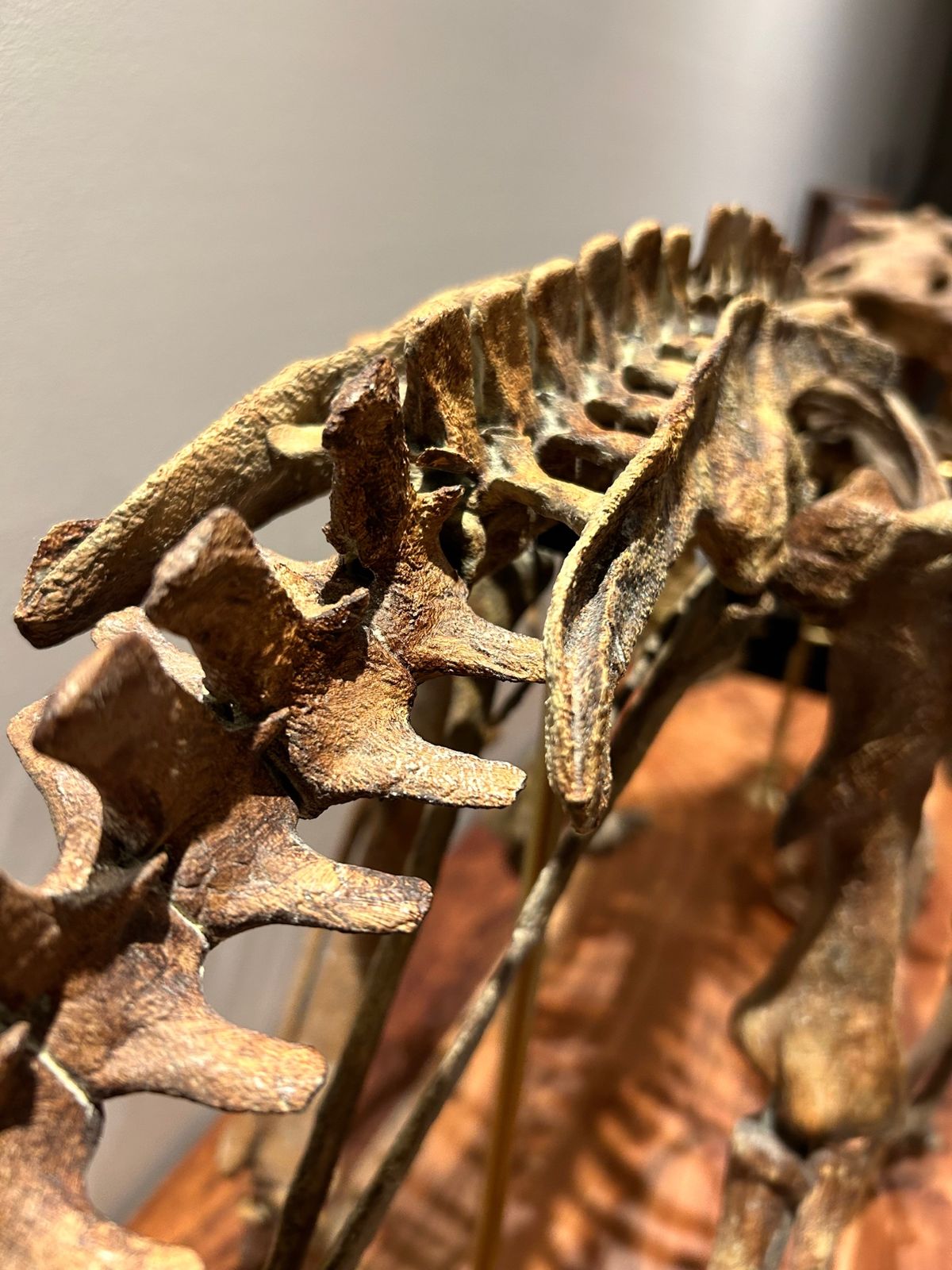
Close-up of one of our skeleton models. Clean bone texture, no support artifacts — just the natural look of fossilised bone.
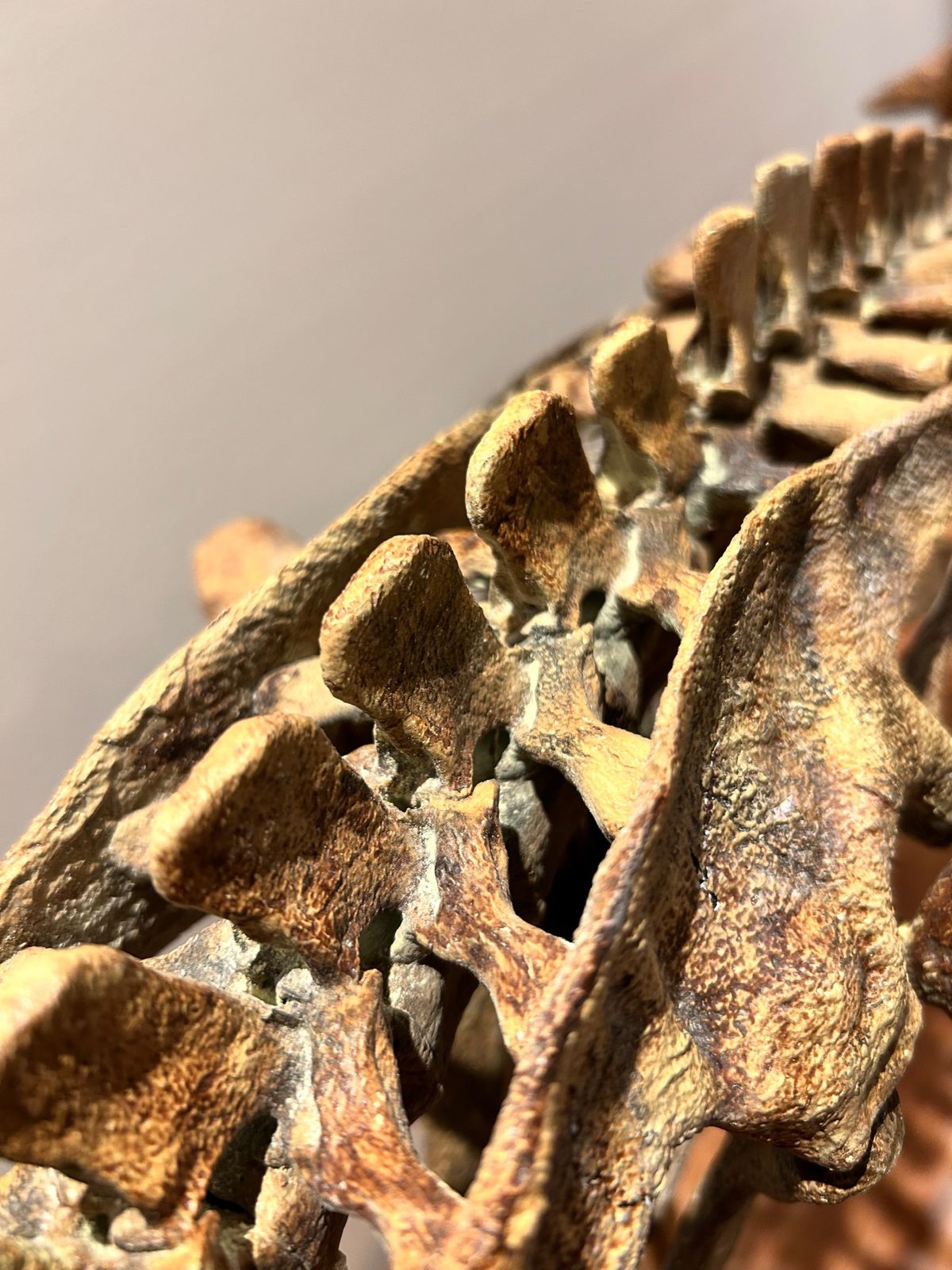
The dorsal vertebrae and neural spines. Every surface is finished to look like real fossil material, not a 3D print.
But the sculpting is only half the story. The real difference shows up after the print comes off the build plate. Support removal, sanding, surface finishing — that’s where a model goes from “3D print” to something that actually looks like fossilised bone. Our licensed vendors — Dinosauria Creatures, Exetinct, and Fire and Bone Studios — follow the same standard. Clean surfaces. Proper textures. No shortcuts. And honestly? They wouldn’t let something with support blips still on it leave their workshop either. They care about this stuff as much as I do.

The rib cage. Smooth, natural curves with realistic bone texture — no blips, no bumps, no leftover support marks.

Another angle of the ribs. This is what proper post-processing looks like.
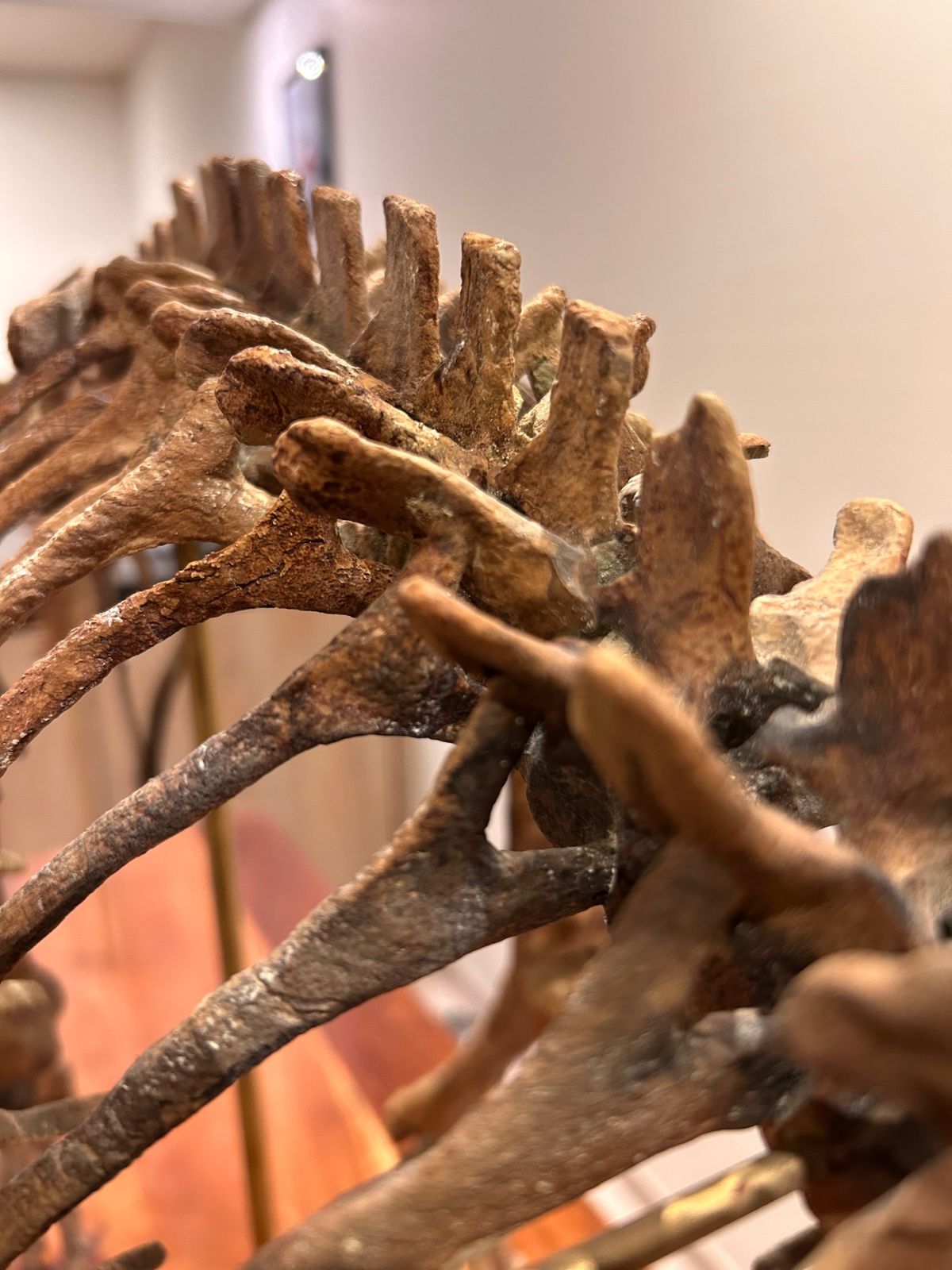
Where the ribs meet the spine. Complex geometry, clean execution.

The full rib spread. Museum-quality detail from every angle.
Don’t take my word for it
My models are on permanent display in actual museums. The Sauriermuseum Bellach in Switzerland has our Protoceratops and our Aquilops americanus — which, by the way, was the world’s first complete skeleton of that species. DinoLab Inc in Canada uses our Psittacosaurus in their kids’ education programs. Our life-sized Elasmosaurus was the centrepiece at the 15th BCPA Symposium.
Museums don’t put things on display that look like they came off a printer five minutes ago. They need pieces that hold up to close inspection, and that’s exactly what I aim for with every single model.
Why it matters
At the end of the day, if you’re spending your money on a dinosaur skeleton, it should look like it belongs in a museum, not like it belongs back on the print bed for another round of post-processing.
That’s the standard I hold myself to. Always have, always will.
Want to see for yourself? Head over to our licensed vendors for painted and unpainted physical models.

