

- About Bambiraptor
- What is in the Bambiraptor skeleton STL download
- Printer size you need
- Printing the Bambiraptor skeleton STL
- Assembly
- Licence
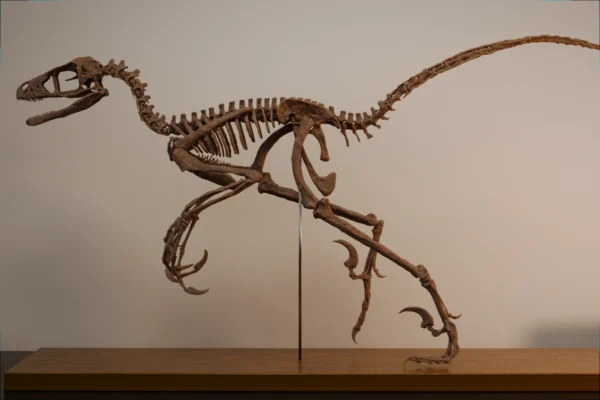
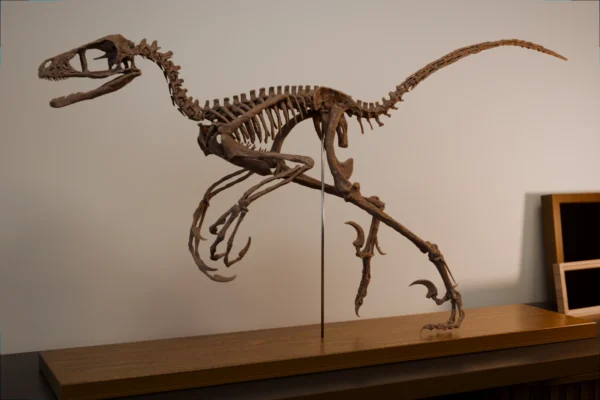
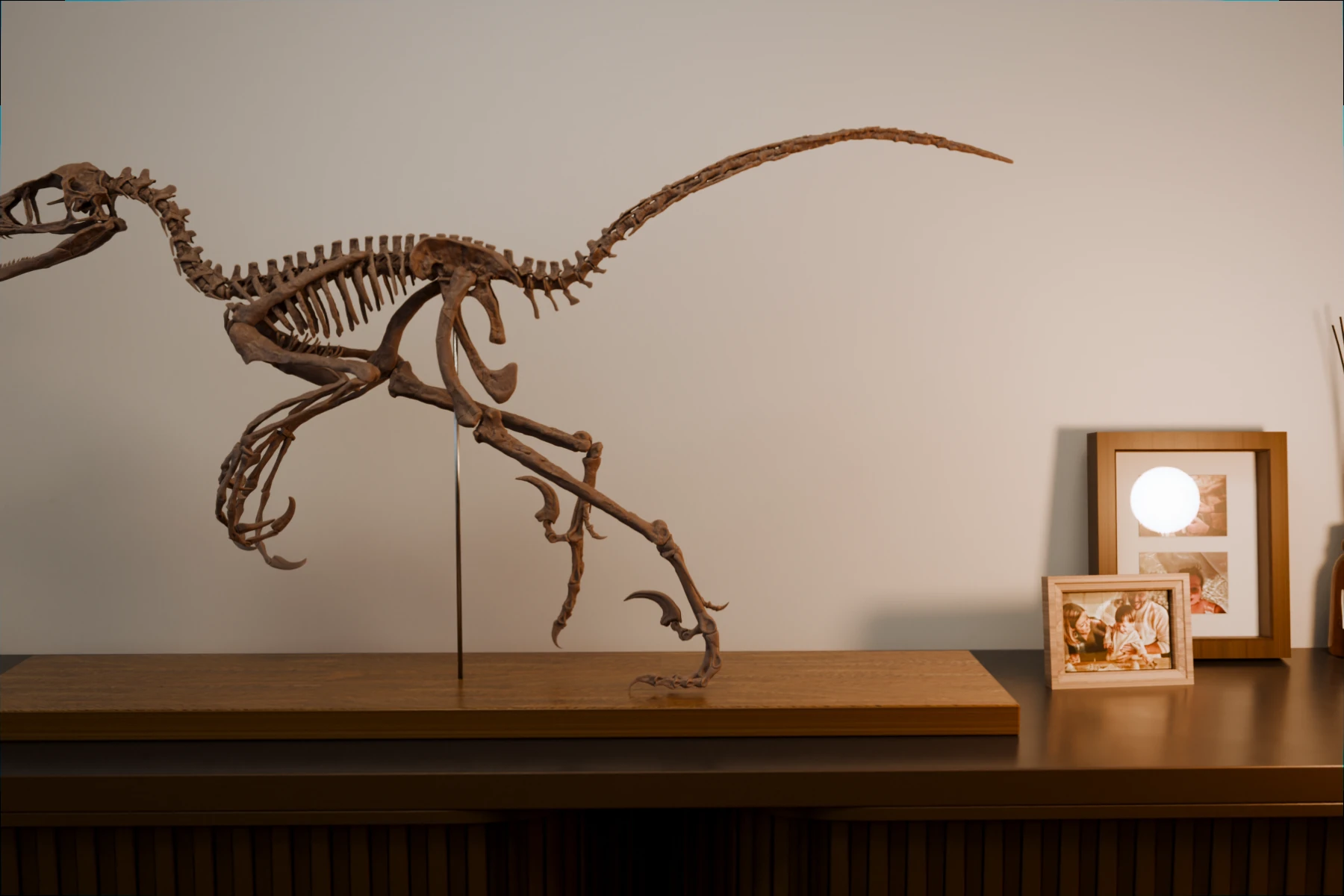
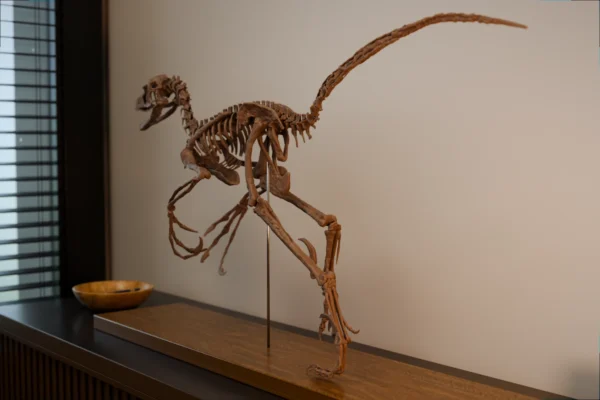
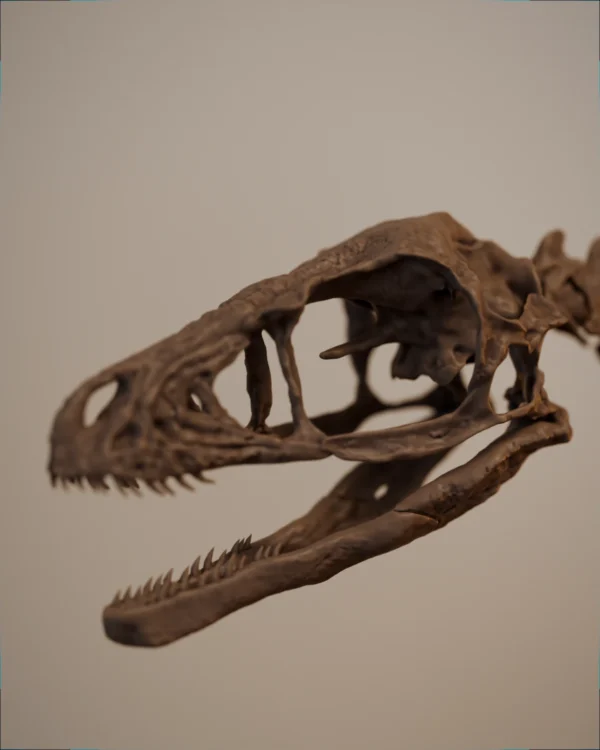
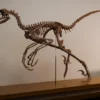
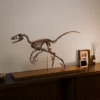
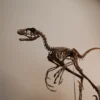
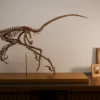
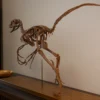
This Bambiraptor skeleton STL is a life-size reconstruction of Bambiraptor feinbergi, a small dromaeosaur from the upper Two Medicine Formation of Montana. The holotype came out of the ground about ninety per cent complete, which for a raptor under a metre long almost never happens. Most animals this size are known from a partial foot and an argument. This one has a skull, a furcula, a sternum, both hands and the whole tail, so I could build the mount out of bone that exists instead of borrowing a spine from a relative.
About Bambiraptor
Wes Linster was fourteen when he found it. He was out with his family near Bynum, Montana in 1993, went off on his own, and came back having uncovered a small theropod that turned out to be one of the most complete dromaeosaurs anyone had dug up.
It was described in 2000 by Burnham, Derstler, Currie, Bakker, Zhou and Ostrom. The genus name is a joke about its size. The species name is for Michael and Ann Feinberg, who bought the fossil and then put it in a museum rather than a living room — it is AMNH FR 30556 now.
What got it into the papers was the brain. At roughly 14 cm³ it was the largest brain for body size of any dinosaur known at the time, and the describers also argued the hand could oppose the first and third fingers, which would let the animal hold something and turn it over. Both claims have taken criticism since. I would treat them as interesting rather than settled.
One more thing, and it is worth knowing before you print a metre of resin. The holotype is a juvenile, and a number of researchers think Bambiraptor is a young Saurornitholestes rather than a genus of its own. If they are right, this is a baby of an animal you already have a name for. I have no position on it and the model does not need one. I sculpted the specimen, at the specimen’s size, and left the taxonomy to the people who argue about it.
Age is late Campanian. Published dates for the upper Two Medicine run from about 80 to 72 million years, and this site usually gets put near the younger end.
What is in the Bambiraptor skeleton STL download
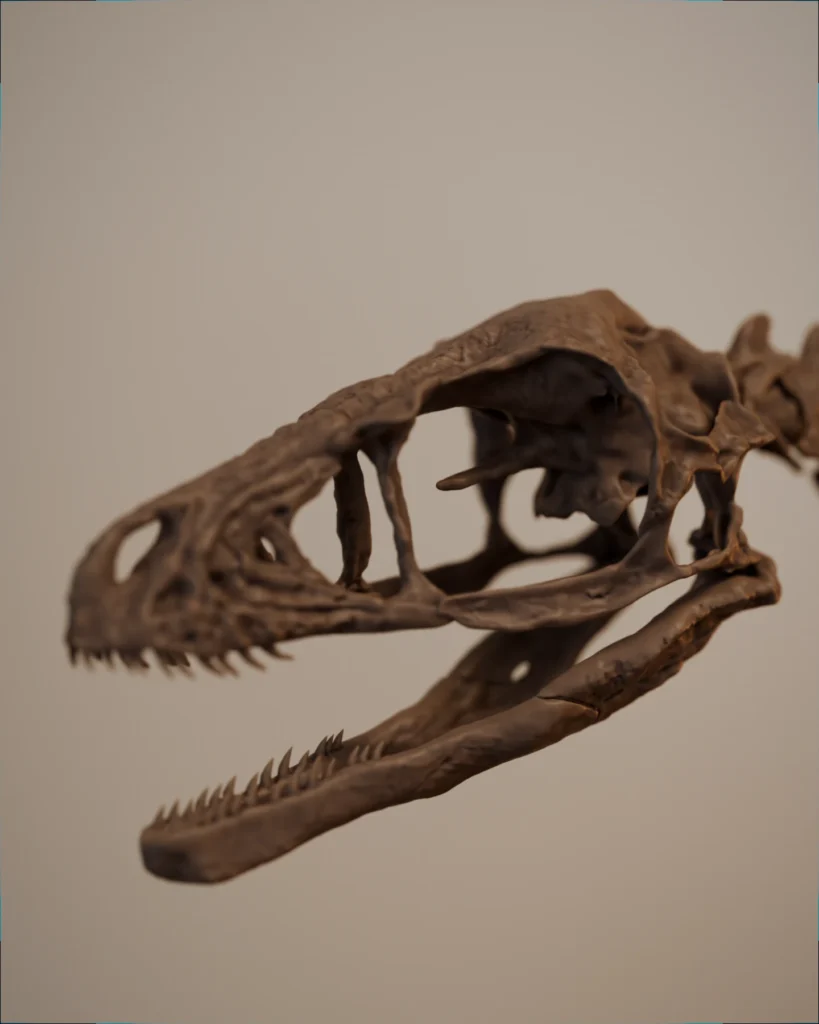
The Bambiraptor skeleton STL downloads as twenty separate parts with a 23-page manual. Here is what you get.
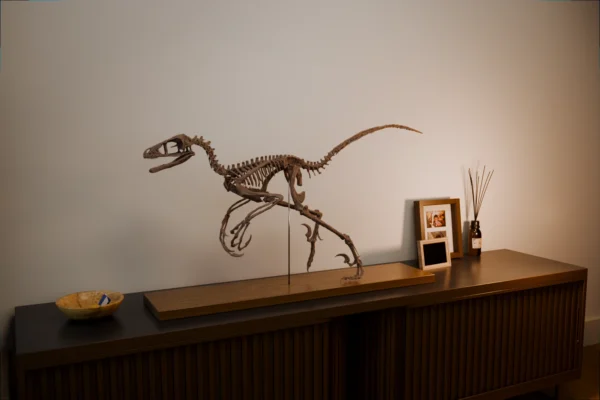
- 847 mm long (33.3 in) from snout to tail tip, 452 mm tall (17.8 in) above the base
- 1:1 scale. This is the holotype’s size, so it is a juvenile. An adult is estimated at about 1.3 m and this is not that.
- 20 STL files, one per bone group: cranium, mandible, the cervical series, dorsals and ribs, sternum, both scapulocoracoids, both forelimbs, sacrum and ilia, pubis and ischium, both femora, both tibia-and-fibula units, both feet, and the tail in three sections
- Binary STL in millimetres, watertight. Import at 100 %, no scaling.
- 23-page assembly manual with a render at every step, the build order, and every rod listed with its length and the joint it belongs to
Printer size you need
Twenty separate parts in the Bambiraptor skeleton STL, so what matters is the biggest one. That is the end of the tail: 15.2 × 209.8 × 32.4 mm. Two hundred and ten millimetres of bone about as thick as a pencil. The part that wants the most plate area is the right forelimb at 90 × 139.1 × 165.8 mm, which laid flat takes 166 × 139 mm.
The honest minimum is 210 × 139 × 90 mm.
FDM. Anything in the 220 × 220 class prints the whole set with room to orient parts properly. An Ender, a Prusa MK, a Bambu A1 or P1S will all be fine.
Resin. Read this before you buy if your printer is small. A Mars or Photon plate, around 150 × 90 mm, will not take the tail section in any orientation — the part is 209.8 mm long and the plate diagonal is 175 mm. A Saturn plate at roughly 218 × 123 mm does take it, with about eight millimetres to spare along the long edge, and the forelimbs then have to be tilted rather than laid flat. Everything else fits a Saturn easily.
Printing the Bambiraptor skeleton STL
Two things on the Bambiraptor skeleton STL will fight you: the tail and the claws.
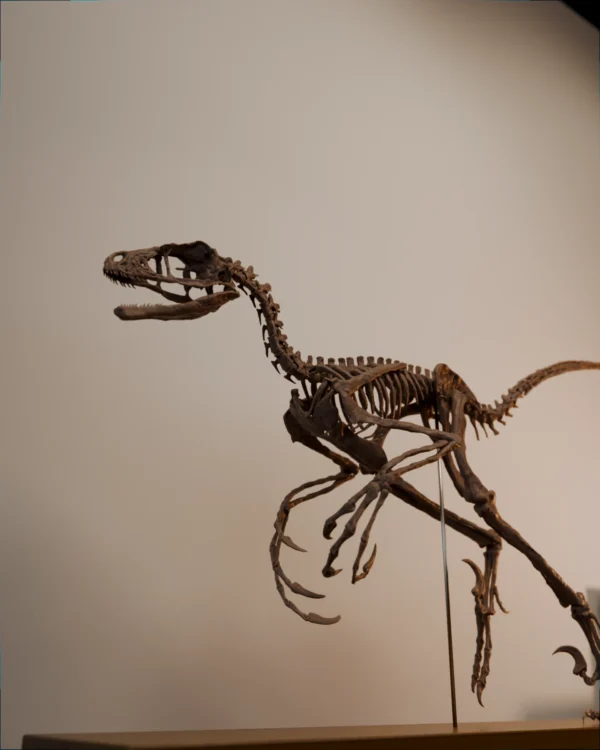
The tail is 210 mm of thin bone in one piece. On FDM it wants to lift off the bed; on resin it wants to bow while it cures. Print it flat, use a brim, keep the chamber warm, do not rush the first layers. The sickle claws come to a point about a millimetre across and the hand claws are not much thicker, so they are the first thing to disappear if the printer is running fast.
FDM. Use a 0.2 mm nozzle if you have one. A 0.4 will print every part, but the rib cross-sections, the neural spines and the claw tips lose a lot of definition. Layer height 0.08 to 0.12 mm, 4 walls, 15–20 % gyroid, PLA or PLA+. Use tree supports, not normal ones — normal supports build a solid block through the ribcage and take the surface with them when you pull them off. Of everything on this list that is the one that changes the result most. Slow down: 30 to 40 mm/s on walls, 20 to 25 on small features.
Resin. Layers of 0.03 to 0.05 mm, parts tilted 20 to 30 degrees, standard grey or a model resin rather than a brittle ABS-like one. The ribs and the tail will snap in a brittle resin if you look at them wrong.
Assembly
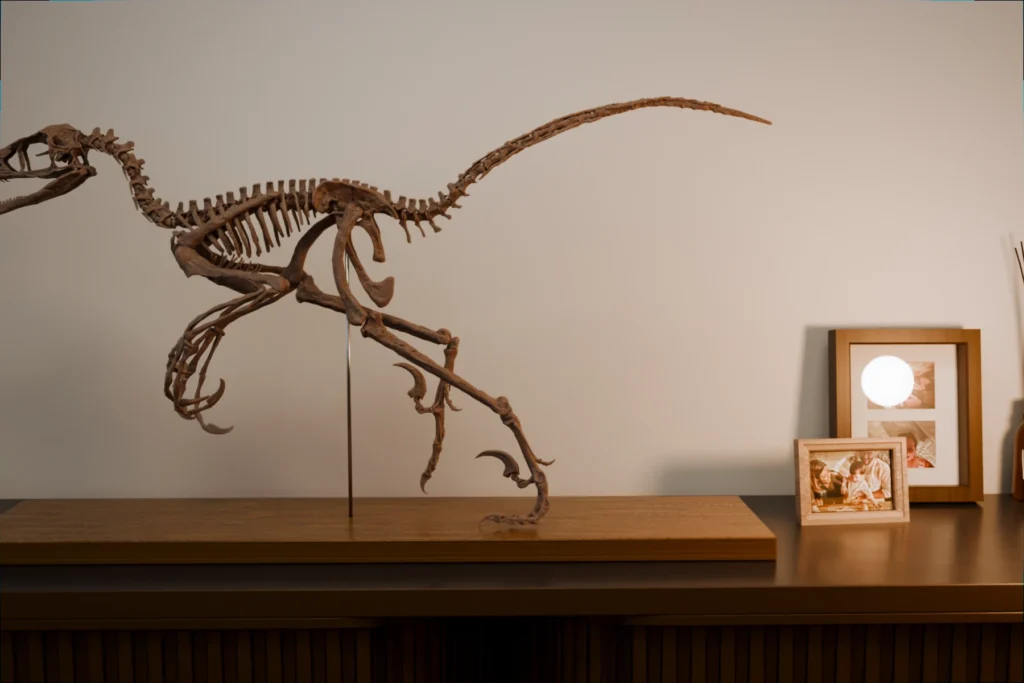
Build order for the Bambiraptor skeleton STL is hips, legs, feet, ribcage, shoulders, arms, neck, head, tail. The pin holes are already in the model, so nothing needs drilling into printed bone. All the holes are modelled about 0.2 mm oversize because both resin and PLA shrink as they cure and cool.
Almost everything is 4 mm steel. One rod, 89 mm long, runs from inside the ribcage straight through the sacrum and out the back into the tail — that single piece ties the front half, the hips and the tail together. The rest are short pins at the knees, ankles, shoulders, neck and skull. The only other steel in the kit is two 2.5 mm pins, 20 mm each, that hang the lower jaw off the skull and let the mouth stand open without a prop.
The animal stands on one 4 mm rod, 360 mm long, running up into the underside of the hips. One hole in your board, drilled 20 mm deep, and that is the whole mount. The manual gives every length so you can cut the set in one go while the parts are printing.
What to buy before you start
One length of 4 mm rod, at least 800 mm. One short length of 2.5 mm rod, at least 60 mm. Two-part epoxy for the joints that carry weight and medium cyanoacrylate for the light ones. A hardwood board of at least 200 × 870 mm if you want the snout and the tail tip to sit over it rather than beyond it.
If the Bambiraptor skeleton STL interests you, my Berthasaura and Aquilops skeletons are built the same way.
Licence
Copyright Nova Studios. The Bambiraptor skeleton STL is sold for personal use only. You can print it for yourself as often as you like. You may not resell or share the files, sell printed copies, or print it for other people as a service. Commercial licences are available on request.
You must be logged in to post a review.


Reviews
There are no reviews yet.