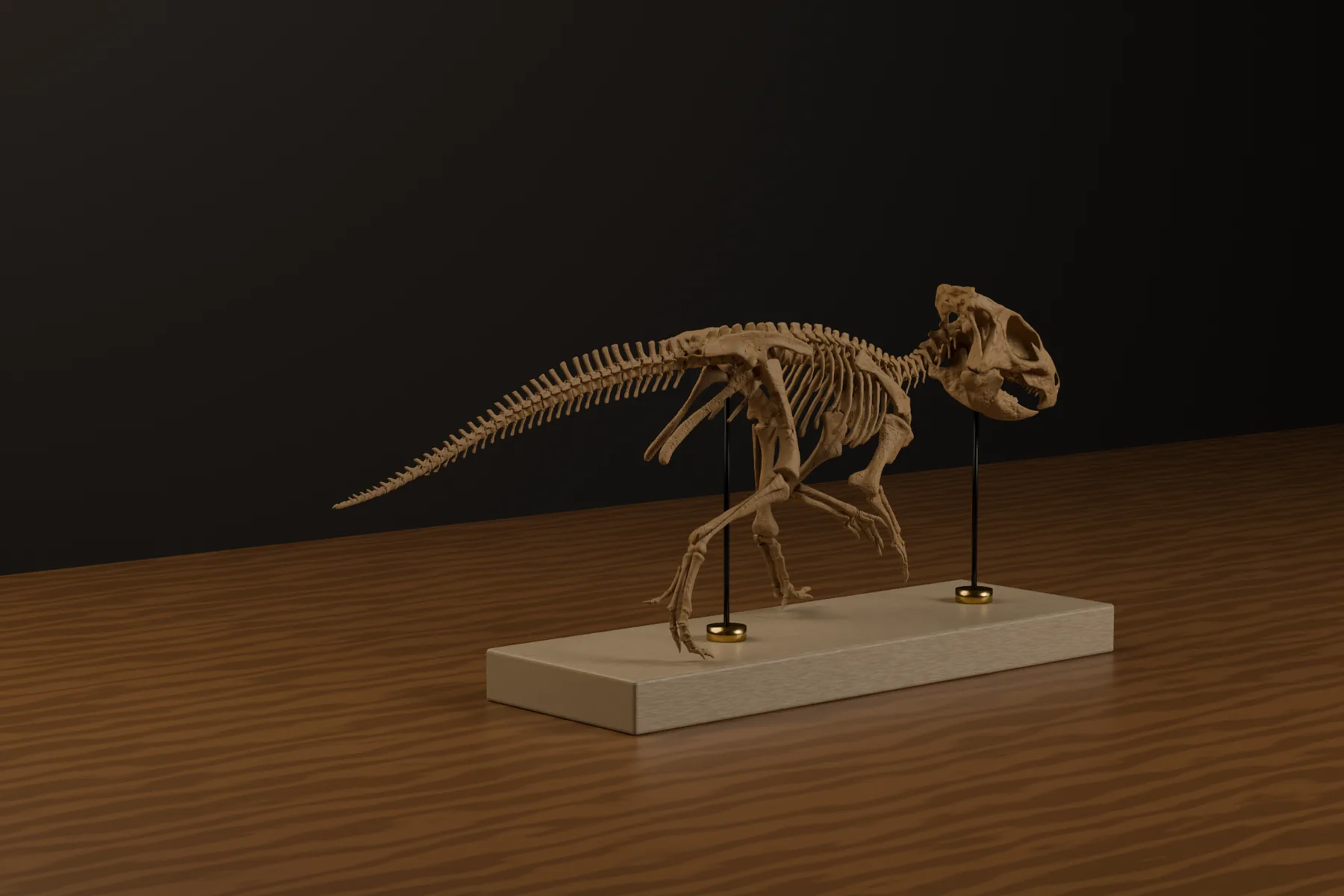
Before you buy this Aquilops skeleton STL, there is something you should know. Aquilops americanus is known from a single partial skull – OMNH 34557, 84 mm from the tip of the rostral bone to the back of the jugal. A cat-sized animal. One specimen. That is the entire fossil record for this genus.
So what exactly are you getting?
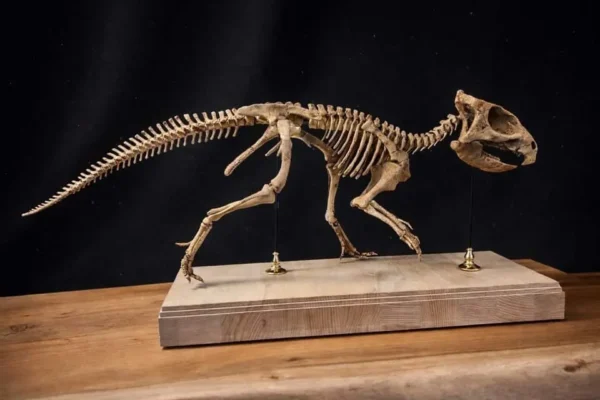
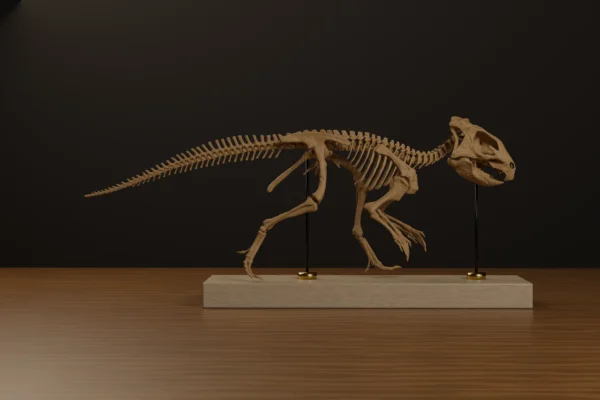
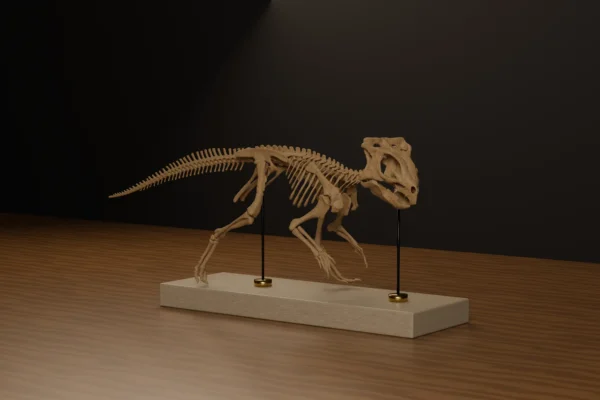
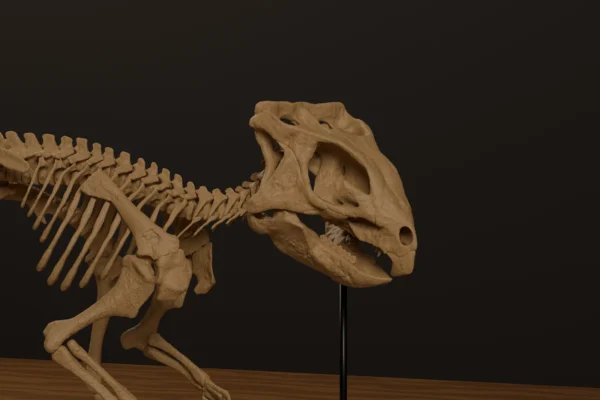
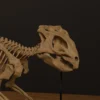
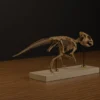
The skull in this Aquilops skeleton STL is reconstructed from that holotype. Everything behind it is built from the basal neoceratopsians we do have decent postcranial material for – mostly Protoceratops and Psittacosaurus, both of which I have built as their own files – scaled and proportioned to fit the skull we have. That is the only honest way anyone can build an Aquilops skeleton right now. I would rather say it here than let you work it out later.
As far as I know, this is the first complete Aquilops skeleton anyone has assembled, in any medium.
Why a cat-sized dinosaur matters
Farke and colleagues described it in 2014. What made it significant was not the size. It was the first Early Cretaceous neoceratopsian from North America that could be pinned to a species at all.
It came out of the Cloverly Formation in southern Montana, middle to late Albian, roughly 104 to 109 million years ago. Its closest relatives are Asian. That is the evidence for horned dinosaurs moving between Asia and North America in the Early Cretaceous, a question people had been arguing about for decades on much thinner ground.
Small animal, large argument. Good thing to have on a shelf next to the big skulls.
What is in the file
- Format: OBJ. Every slicer reads it, and if you want an STL your slicer will export one in a click.
- Supplied without supports. Orientation and support placement are yours to decide, because they depend on your printer and your resin, not on mine.
- Reconstruction based on Farke, Maxwell, Cifelli & Wedel (2014), PLOS ONE 9(12): e112055
Printing this Aquilops skeleton STL
Print it in resin. The whole point of Aquilops is the skull – the rostral bone, the sutures, the tooth row – and at this size filament will smear all of it. This is the kind of model resin exists for.
I would recommend a printer with roughly a 10 inch build volume. Not because the model will not fit on something smaller, it will, split up. But at 10 inches you can lay the larger elements out flat instead of angling them across a cramped plate. Fewer supports on visible surfaces, less cleanup, better joins.
Layer height: 0.025 mm on the skull if your printer will do it. You can go coarser on the postcranial parts without anyone noticing.
After you pay
The download link appears on your order confirmation and in the confirmation email, so the Aquilops skeleton STL is yours a minute after checkout. Nothing waits on me to send it by hand. If a link ever stops working, mail me at [email protected] and I will reissue it.
Licence
Personal, non-commercial use. Print it for yourself, print it for your classroom, put it in a display case, photograph it. What you cannot do is sell prints of it, resell the file, or upload it anywhere else.
Why no supports?
Because support placement depends on your machine, your resin and the orientation you pick. Baking my choices into the file would only make your prints worse.
How accurate is it, really?
The skull is as close to the published description as I can get it. The rest is a reasoned reconstruction from close relatives, and I have said so above rather than hiding it in the small print.



Reviews
There are no reviews yet.