









- About Jeholosaurus
- What is in the Jeholosaurus skeleton STL download
- Printer size you need
- Printing the Jeholosaurus skeleton STL
- Assembly and the base
- Licence
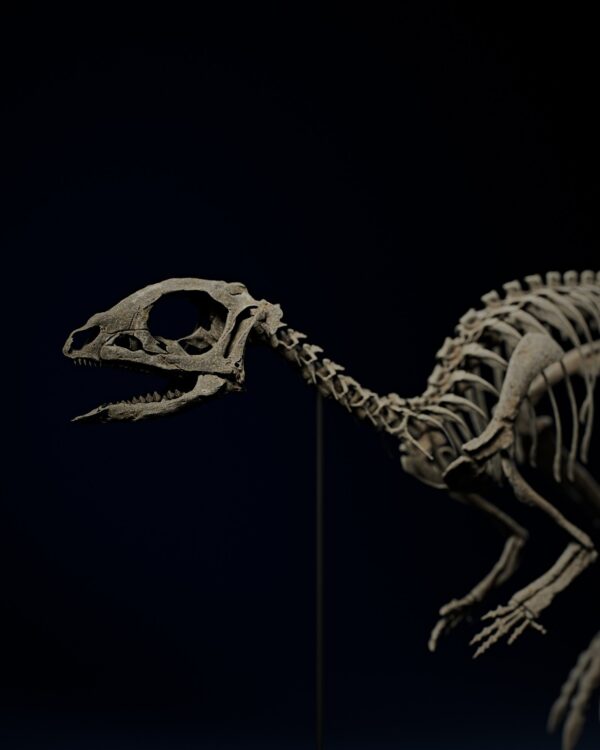
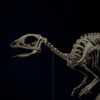
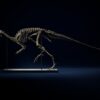
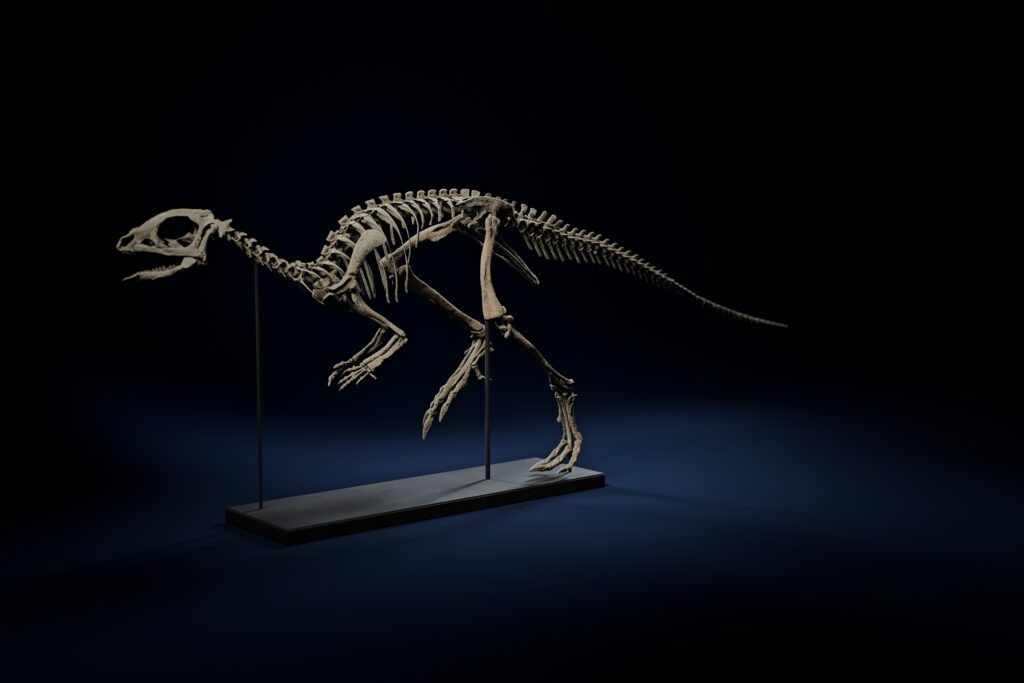
This Jeholosaurus skeleton STL is a life-size Jeholosaurus shangyuanensis, built at the size of the holotype: a young animal from the Early Cretaceous of Liaoning, China. It stands mid-stride on its base with the left foot coming down, 72 cm from the tip of the snout to the end of the tail, and it comes in sixteen parts with a manual that takes you through every joint.
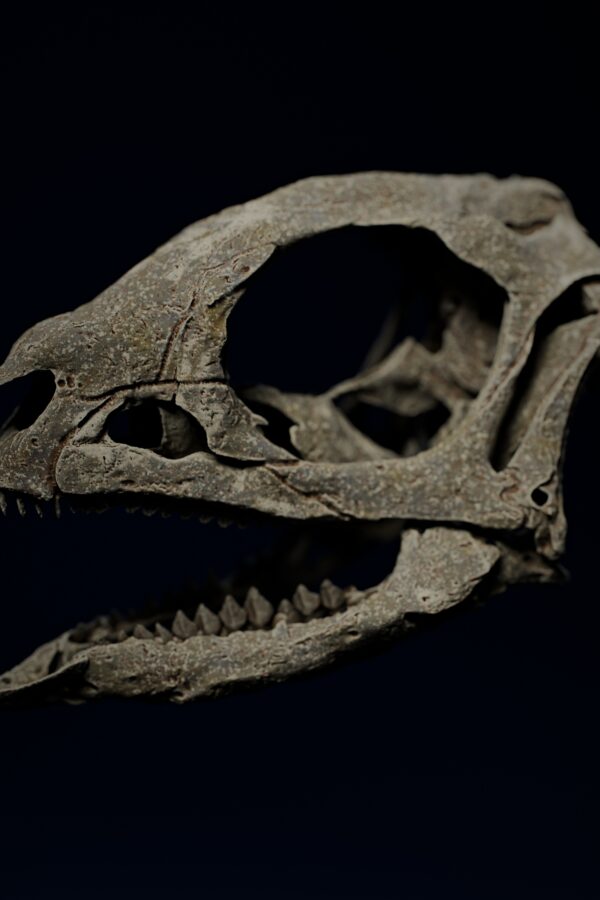
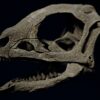
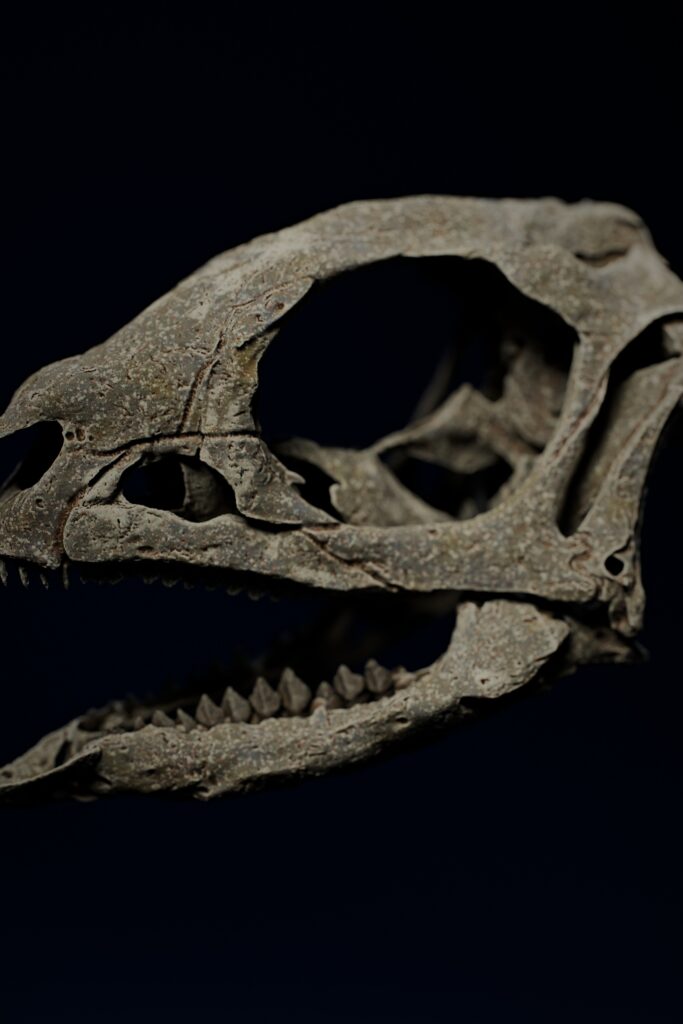
The skull is the part I’m proudest of, and I didn’t do it alone. It is sculpted on the CT models of a Jeholosaurus skull that Filippo Bertozzo and his colleagues published in 2025. Filippo then went over the finished skeleton and its measurements before I released it, and gave me advice along the way. A palaeontologist who has had this animal’s skull through a CT scanner checked the work, so I’ll say it plainly: I think this is the most accurate Jeholosaurus skeleton you can print today.
About Jeholosaurus
Jeholosaurus shangyuanensis was named in 2000 by Xu Xing, Wang Xiaolin and You Hailu, from two specimens found around Lujiatun in western Liaoning. The rocks there are the lowest part of the Yixian Formation, a little over 120 million years old, and they’re volcanic: ash, and ash washed back in by water. The same beds gave us Psittacosaurus preserved in groups and the little troodontid Mei long curled up as if asleep, which is why skeletons from Lujiatun are so often complete.
It was a small, two-legged plant-eater. Or maybe not quite. The front of the upper jaw carries conical, slightly curved teeth; further back they turn leaf-shaped, the kind plant-eaters use, and that mix is why it keeps being called a possible omnivore. In 2012 Han and colleagues gave it a family of its own, Jeholosauridae, with Changchunsaurus and Haya, near the base of the ornithopods. Where exactly that family sits is still argued over. There is more background on Wikipedia.
The holotype, IVPP V12529 in Beijing, is a skull, the first seven neck vertebrae, broken pieces of the back and sacrum, runs of tail vertebrae and both hind legs. Its neural arches hadn’t fused to the vertebral bodies yet, so it was a young animal, and this model is built at its size.
The skull started from the 3D models in Bertozzo, Niu, Vallée Gillette and Godefroit (2025), segmented from CT scans of a well-preserved juvenile skull, YLSNHM 01942. I sculpted on top of them in Blender until the end model was my own, opened the jaw and fitted the head to the neck. The rest of the skeleton I sculpted myself, from the 2012 description of the skeleton by Han and colleagues.
What is in the Jeholosaurus skeleton STL download
- 72 cm long (28 in) from snout to tail tip and 26 cm tall on its base: 1:1, at the size of the holotype
- 16 STL files: fifteen skeleton parts, and the base with its three posts printed on
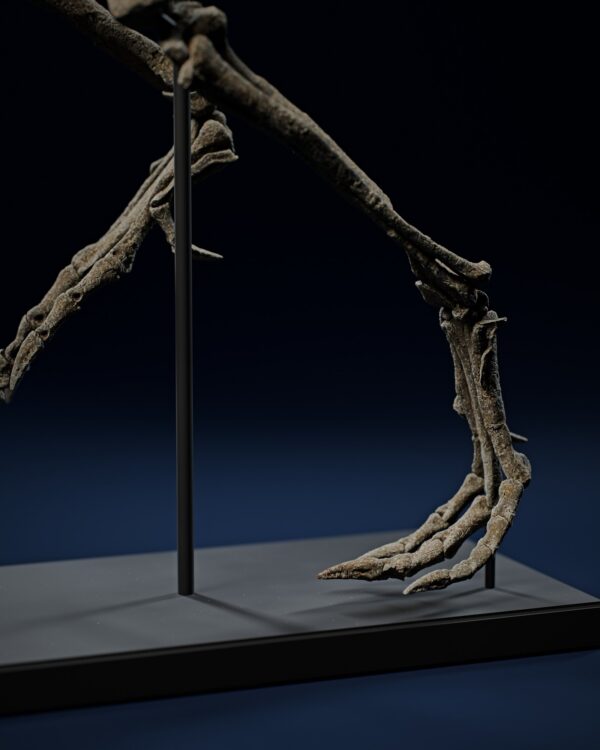
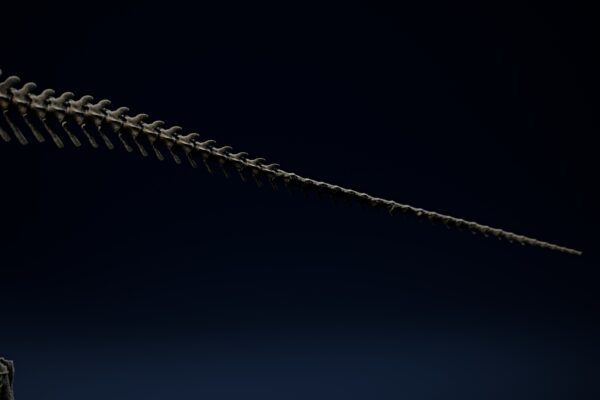
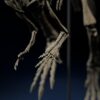
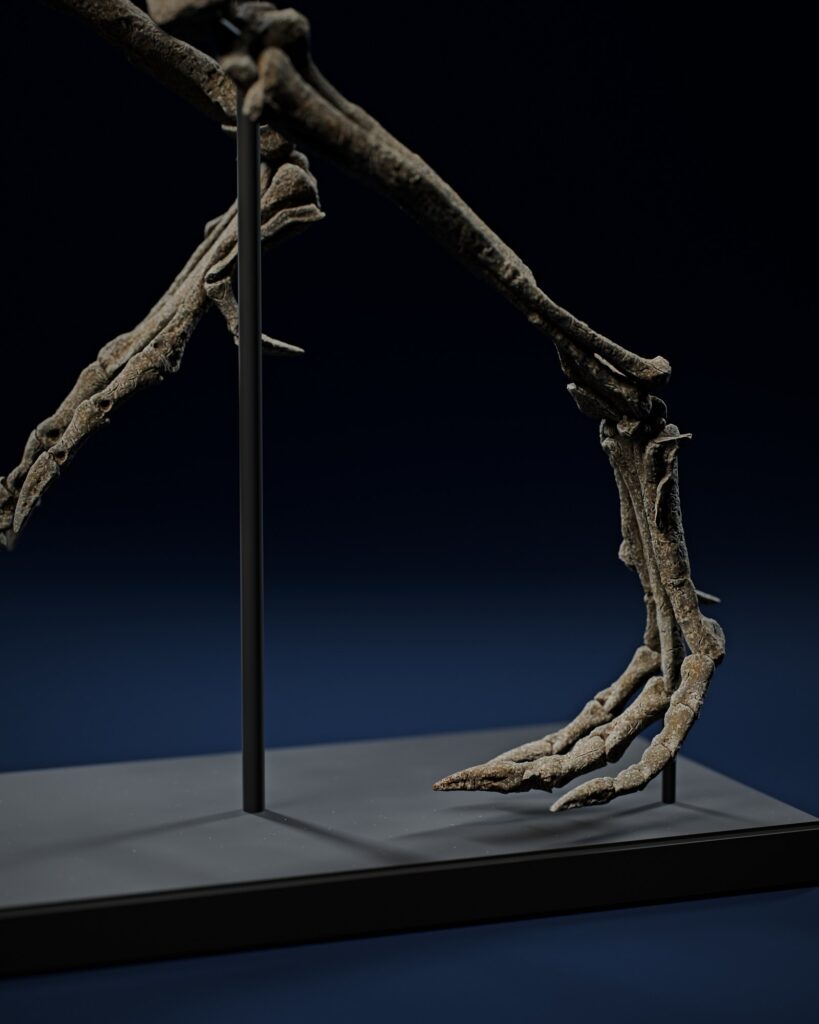
- The skeleton parts: the hip with the sacrum and both femora, the two lower legs with their feet, the ribcage in two parts with the shoulder girdle, both forelimbs and one loose carpal, the neck, the tail in four sections, the cranium, and the lower jaw with its teeth
- Bores for nine 2.5 mm steel pins, already in the model, and the sockets for the three posts
- Files at 1:1 in millimetres. Import at 100%, no rescaling.
- A 16-page print and assembly manual in PDF: the part list with sizes, print settings, the pin list with lengths, and the build in seven steps with a render for each
The seams in the Jeholosaurus skeleton STL fall where the real bones meet anyway, between vertebrae, at the knee and at the shoulder, so most of them need no filling at all.
Printer size you need
Fifteen of the sixteen parts of the Jeholosaurus skeleton STL fit a resin printer of the Anycubic Photon Mono M7 Pro class, 223 × 126 × 230 mm, with room to spare. The largest bone part is the hip at 140 × 88 × 109 mm; the cranium is 80 × 43 × 49 mm. On a smaller resin printer, around 150 × 90 mm, check the hip first, because it’s the tightest fit.
The base is the exception. It’s 322 × 95 mm and stands 241 mm tall with its posts, so it wants a large-format printer, FDM or resin. Print it in something tough: PETG on FDM, or an ABS-like resin rather than a standard brittle one, because those posts carry the whole skeleton. The bones themselves are thin and belong on a resin printer.
Printing the Jeholosaurus skeleton STL
The files come without supports, on purpose. Where they go depends on your printer, your resin and how you lay the part on the plate, so that call is yours. Two rules: keep them off the faces where two parts meet, and away from the mouths of the pin bores. A support scar on a joint face is a gap you will see in the finished skeleton.
The bones print solid. The hip is the only part worth hollowing, to a 2.5 mm wall, with the drain holes in the underside of the sacrum and well clear of its bores. Layer height 0.05 mm, exposure per your resin. Wash, dry and cure fully before you touch a drill to anything.
Every pin runs in a 2.7 mm bore that’s already in the model, and the hip sits on its post in a 4.2 mm socket. Resin closes up a little as it cures, so once the parts are cured, run a 2.8 mm drill (4.3 mm for the hip socket) through each bore by hand, turning the bit between your fingers. Not with a drill motor. The walls are thin.
The three posts print with the base, 4.2 mm under the hip and 2.7 mm under the neck and the left foot. They’re the tallest, thinnest things in the set. Print the base flat with the posts standing up, slow the printer down for them, and from then on carry the base by the plate, never by a post.

Assembly and the base
The Jeholosaurus skeleton STL goes together in seven steps, and the order matters more than usual. It isn’t quite the order you’d guess, either. The hip goes together first, then the legs, the ribcage with the arms, and the neck, all off the base, lying on a folded towel. Only then does the body go onto the base, straight down onto three posts at once: one under the hip, one under the left foot, one under the neck. The posts stand parallel, so there’s one way down, and only before the tail and the skull are on. After that it’s easy. The tail goes on in four sections, then the skull, then the jaw.
Two-part epoxy on every pin and on the faces around it. The joints without a pin, the arms at the shoulders, the carpal, the last tail section and the jaw, take a gel cyanoacrylate or epoxy on the face alone. Dry-fit everything first, pins in, standing on the base. It takes half an hour, and a pin that has gone off in the wrong bore doesn’t come out again.
What to buy before you start. 300 mm of 2.5 mm steel rod, stainless or mild, for the nine pins. Drill bits of 2.8 and 4.3 mm to clear the bores by hand, side cutters or a fine saw for the rod, a file for the burrs, epoxy, masking tape and a needle file. That’s all of it.
If you like building skeletons this way, my Berthasaura and Bambiraptor are made and documented the same way, and the rest of the 3D printed dinosaur files are here.
Licence
Copyright Nova Studios. This Jeholosaurus skeleton STL is sold for personal use only. You can print it for yourself as often as you like. You may not resell or share the files, sell printed copies, or print it for other people as a service. Painted, finished copies are sold by the licensed vendors listed on the home page; commercial licences are available on request.
Credit where it’s due. The skull is built on the ct data by Filippo Bertozzo, published with Bertozzo F, Niu K, Vallée Gillette N and Godefroit P (2025), Anatomical description and digital reconstruction of the skull of Jeholosaurus shangyuanensis (Dinosauria, Ornithopoda) from China, PLOS ONE 20(1): e0312519. Those models are free under CC BY 4.0 on figshare; the skull in this download is my changed sculpt on top of them, and the licence above covers my work, not theirs. Thank you, Filippo, for checking the finished skeleton.
You must be logged in to post a review.


Reviews
There are no reviews yet.