



- About Iguanodon
- What is in the Iguanodon skeleton STL download
- Printer size you need
- Printing the Iguanodon skeleton STL
- Assembly and the base
- Licence
About Iguanodon
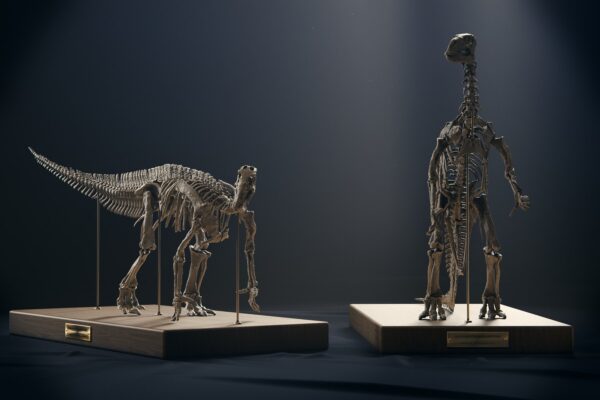
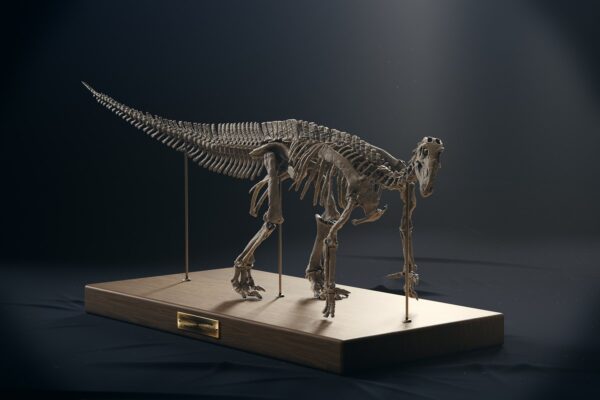
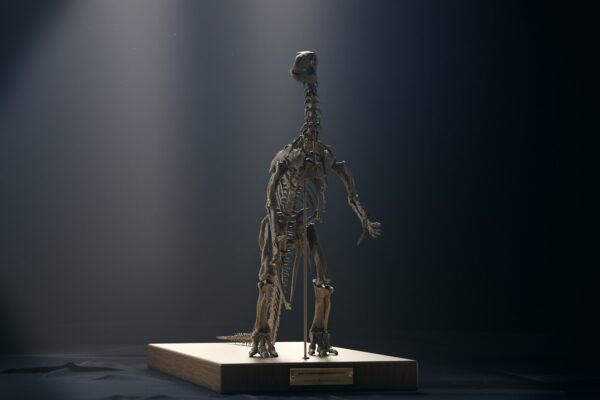
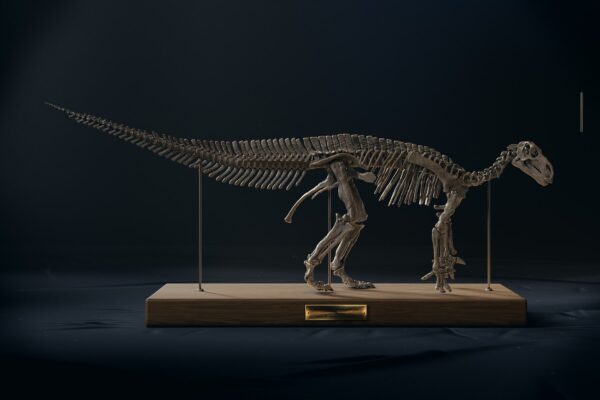
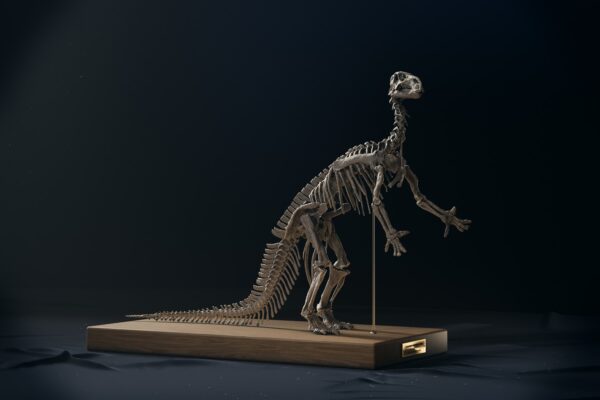
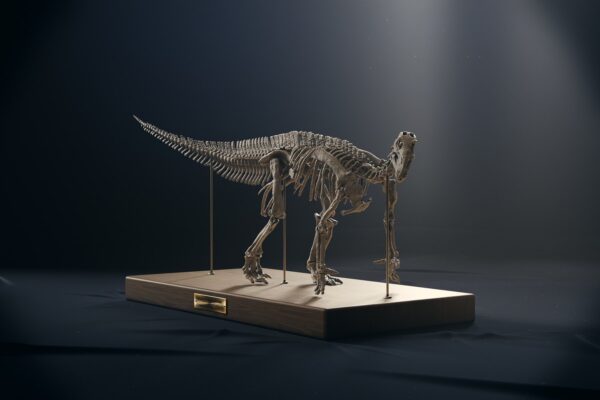
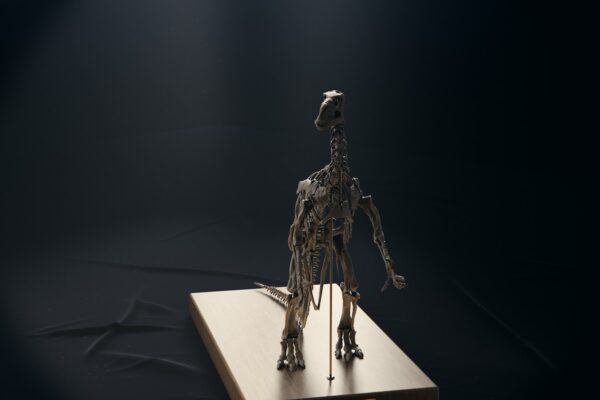
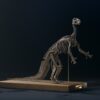
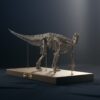
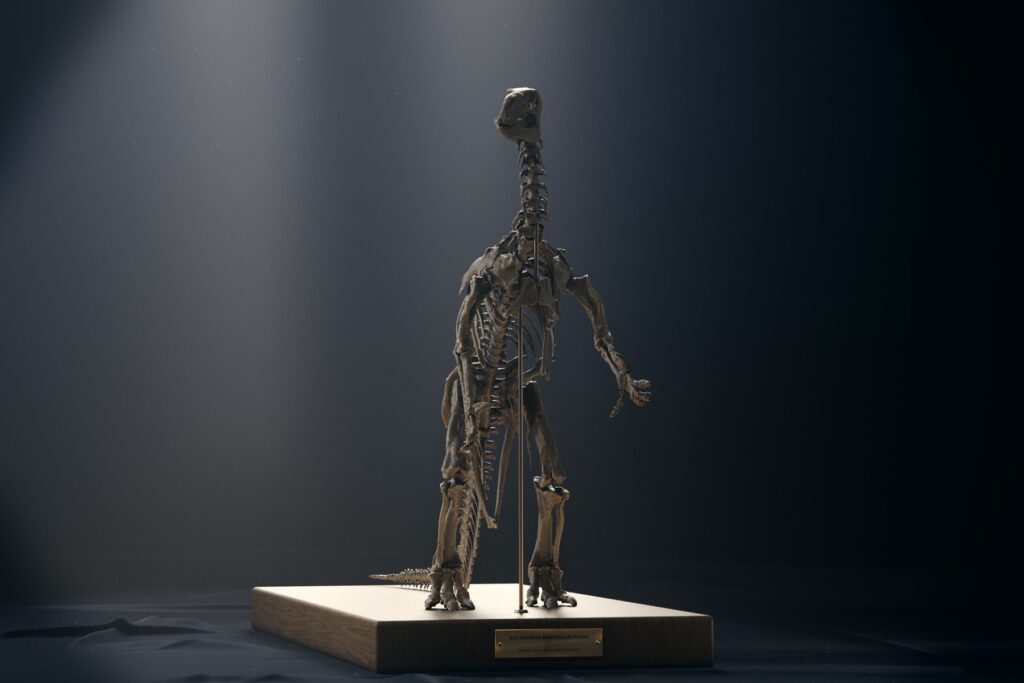
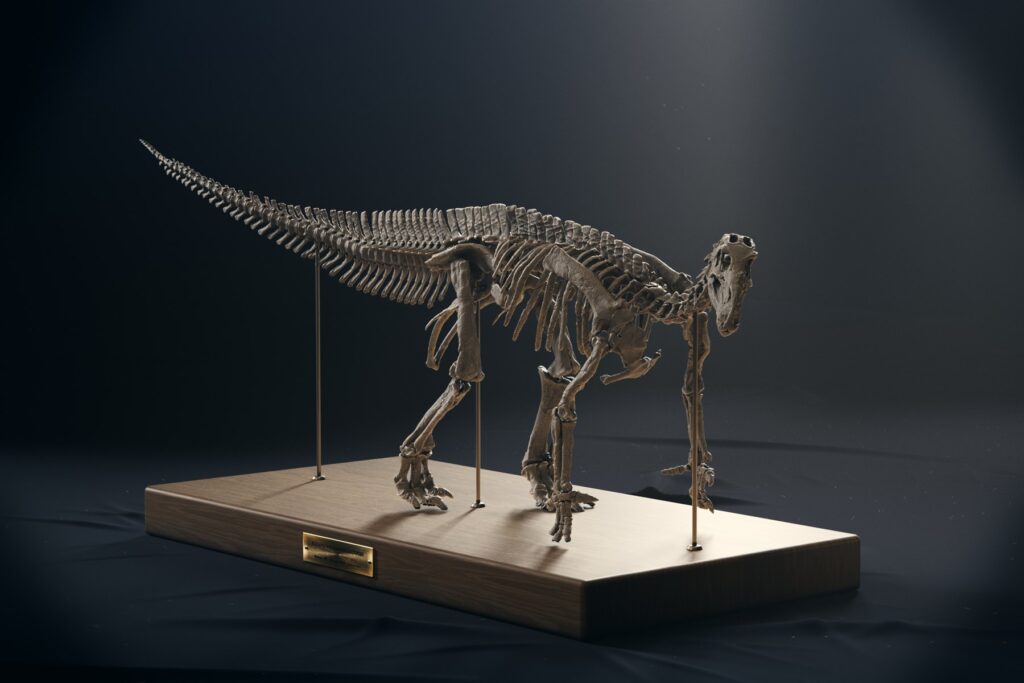
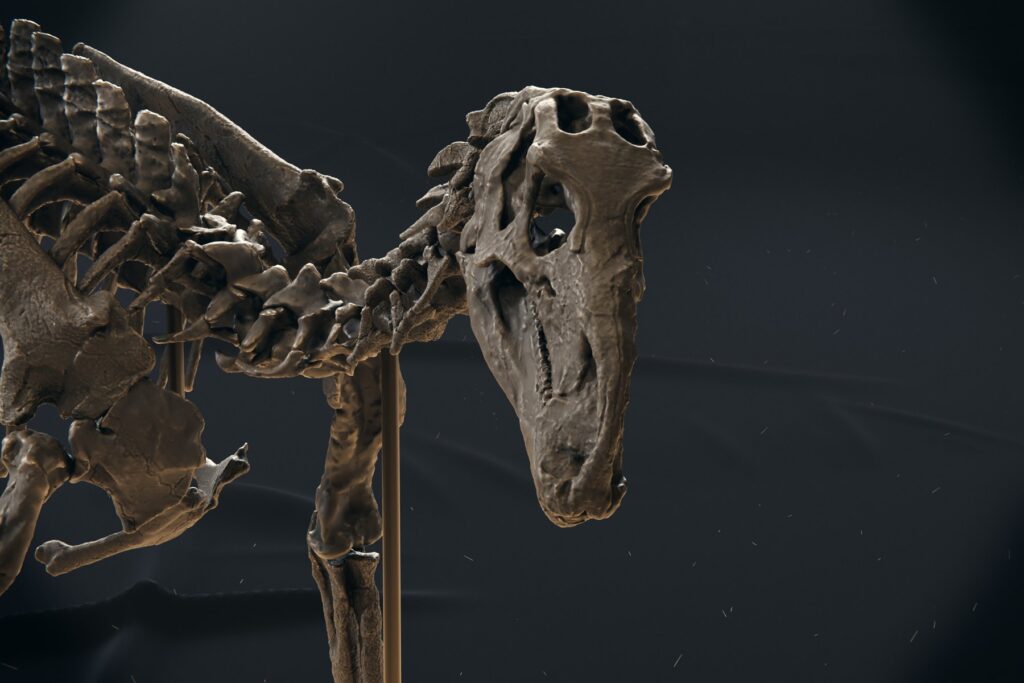
This Iguanodon skeleton STL builds Iguanodon bernissartensis twice. Once the way palaeontologists read the animal today, on all fours with the back level and the tail held off the ground. And once in the famous upright pose the first Bernissart skeleton was given in Brussels in 1882, standing on its hind legs with the tail on the ground like a kangaroo.
The story behind it is hard to beat. In 1878 miners in the Sainte-Barbe pit at Bernissart, in Belgium, hit bone 322 metres underground. They had found dozens of Iguanodon skeletons, many of them complete and still articulated. Louis Dollo spent much of his career describing them, and they still stand in the Royal Belgian Institute of Natural Sciences in Brussels. More background on the animal is on Wikipedia.
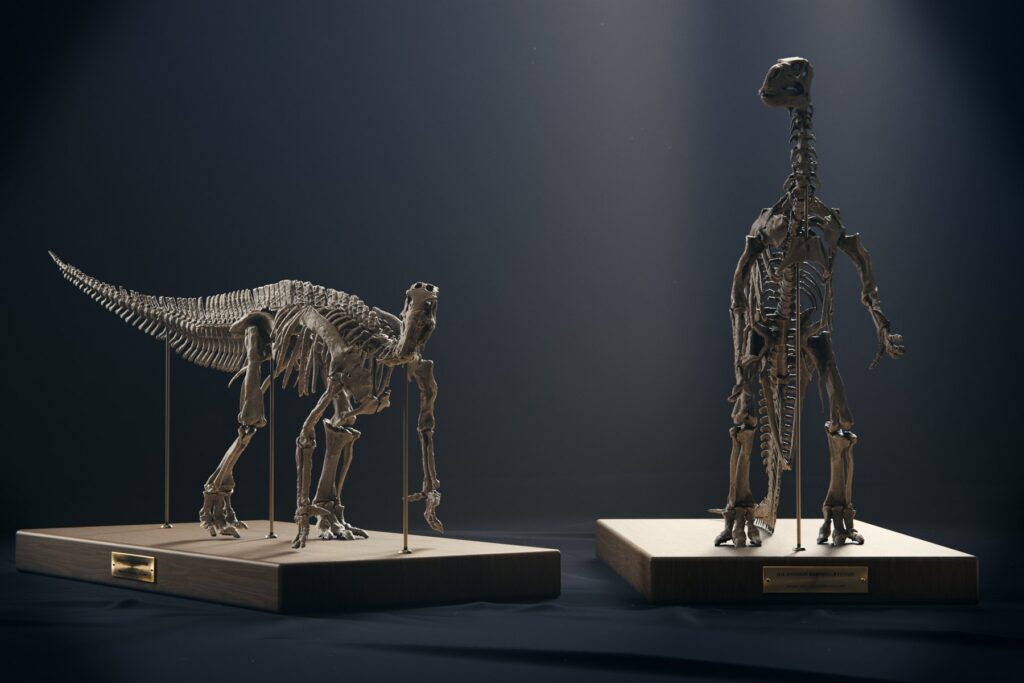
The 1882 pose shaped how the world pictured dinosaurs for nearly a century. To get the animal into it, the tail had to be broken: Iguanodon could not bend that way in life. David Norman’s 1980 monograph on the Bernissart skeletons showed an animal that spent most of its time on all fours, and that is the pose of the modern mount. I sculpted both so you can choose, or put the two side by side and show how far the science has come.
What is in the Iguanodon skeleton STL download
- Two complete skeletons: the modern quadrupedal pose and the historical 1882 standing pose
- Modern pose: 13 STL parts, about 900 mm from snout to tail tip and 335 mm tall above the base
- 1882 pose: 12 STL parts, about 490 mm tall above the base
- Pin holes for 4 mm steel rod already in the parts, 4.2 mm across so the glue has room
- A 36-page assembly manual with a render for every step, the rod cut lengths and drilling plans for both bases
- Files in millimetres, ready to print at 100 %
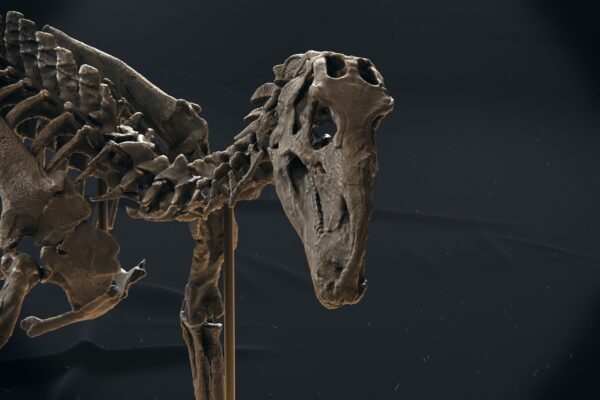
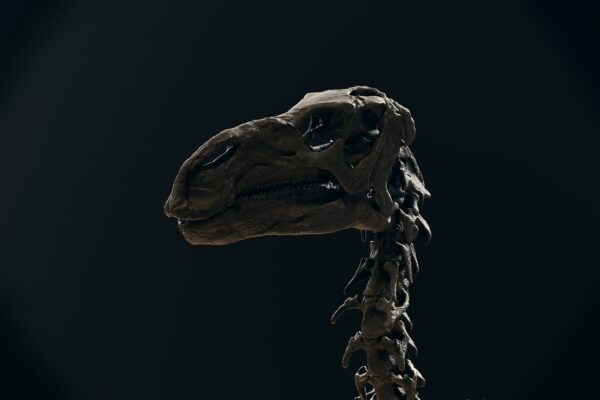
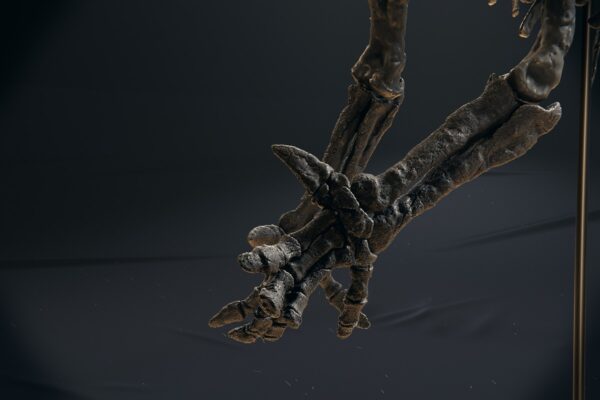
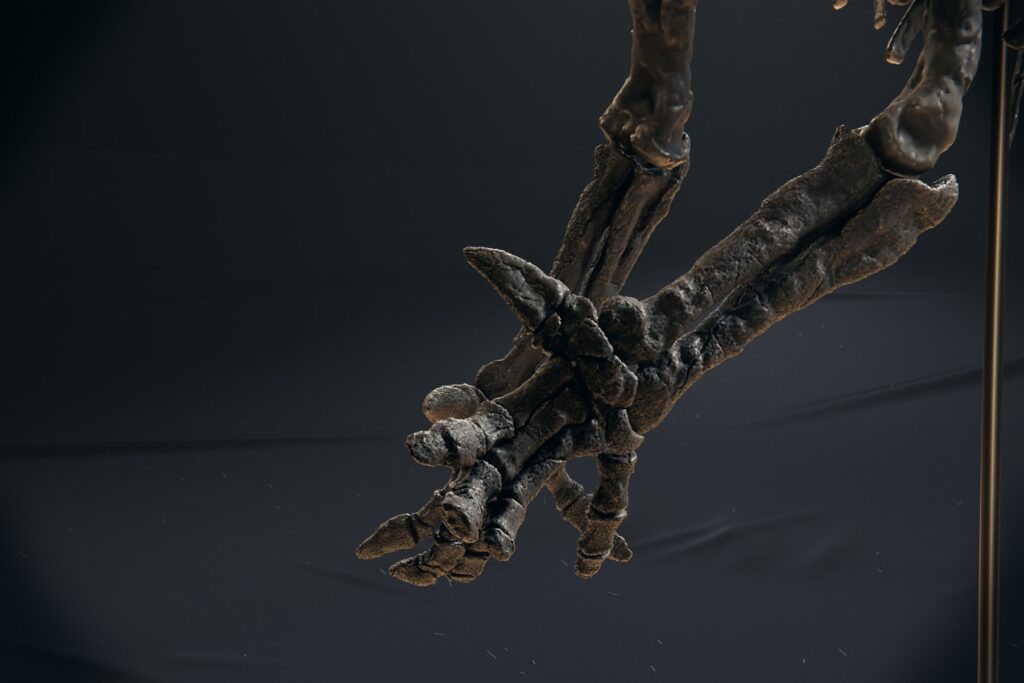
The skeletons are split into sections, not into single bones: pelvis, legs, the trunk in two halves, arms, the tail in two or three sections, neck and skull. Fewer joints means a straighter skeleton at the end.
Printer size you need
I sized the parts for a 10-inch resin printer such as the Elegoo Saturn 4 Ultra 16K (211.68 × 118.37 × 220 mm). The largest modern-pose part, the pelvis, measures 177 × 142 × 96 mm along its own axes. Three parts of the 1882 pose are longer than 220 mm, the right hindlimb, the first tail section and the right forearm, so stand them diagonally in the vat or print them on a bigger machine. Any 250 × 250 × 250 mm FDM printer takes the whole kit.
Printing the Iguanodon skeleton STL
The files come without supports. That is on purpose: where supports go depends on your printer, your resin and how you orient each part, so that call is yours. Keep supports off the joint faces and out of the pin holes.
Print the bones solid. Only the pelvis and the two trunk halves can be hollowed, with 2.5 mm walls and drain holes at the lowest point. On resin use a 0.03 to 0.05 mm layer height and tilt the parts 20 to 30 degrees. On FDM, a 0.2 mm nozzle keeps the thin ribs and neural spines sharp. Print the pelvis, the legs and the trunk first: they decide whether the finished skeleton stands straight.
Assembly and the base
Both mounts go together in ten steps. The legs go onto the pelvis first, the pelvis goes onto its support rod, then the ribcage, the arms, the tail, the neck, and the skull last. Every pinned joint takes the same 4 mm steel rod, which you cut to the lengths in the manual: 756 mm of rod for the modern pose, 621 mm for the 1882 pose. Use two-part epoxy on the pins and the joints that carry weight.
The base is not part of the download. The manual gives the board size for each pose and exactly where to drill the rod holes. If you like this format, the Jeholosaurus skeleton and the Berthasaura skeleton go together the same way, and the rest of my 3D printed dinosaur files are in the shop.
Licence
Personal use only. You can print it for yourself as often as you like. You may not resell or share the files, sell printed copies, or print it for other people as a service. Commercial licences are available on request. Instant digital download, nothing is shipped.
You must be logged in to post a review.


Reviews
There are no reviews yet.