



- About Zavacephale
- What is in the Zavacephale skull STL download
- Printer size you need
- Printing the Zavacephale skull STL
- Putting the jaw on
- Licence
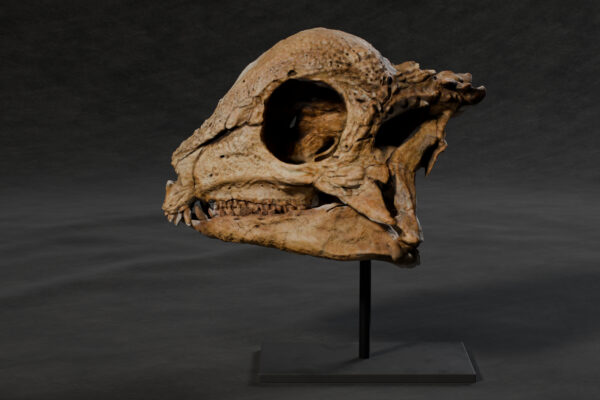
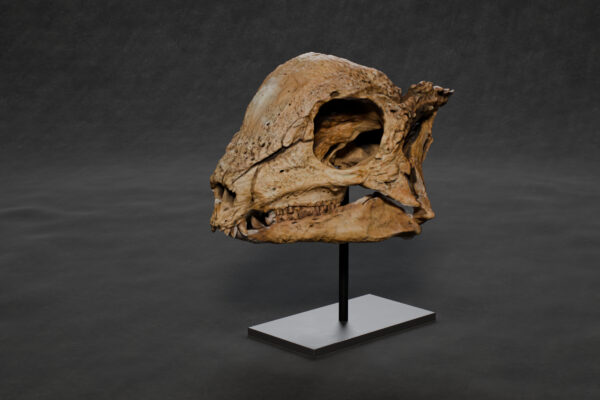
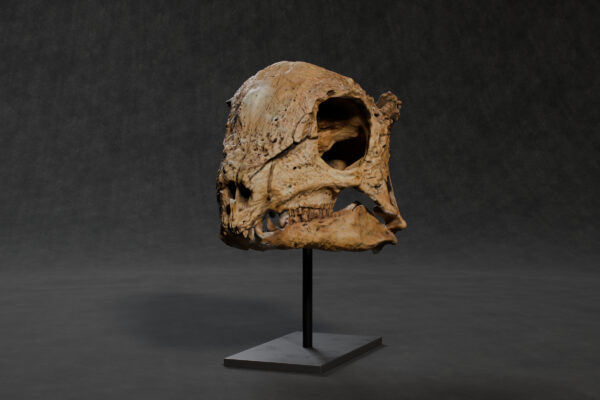
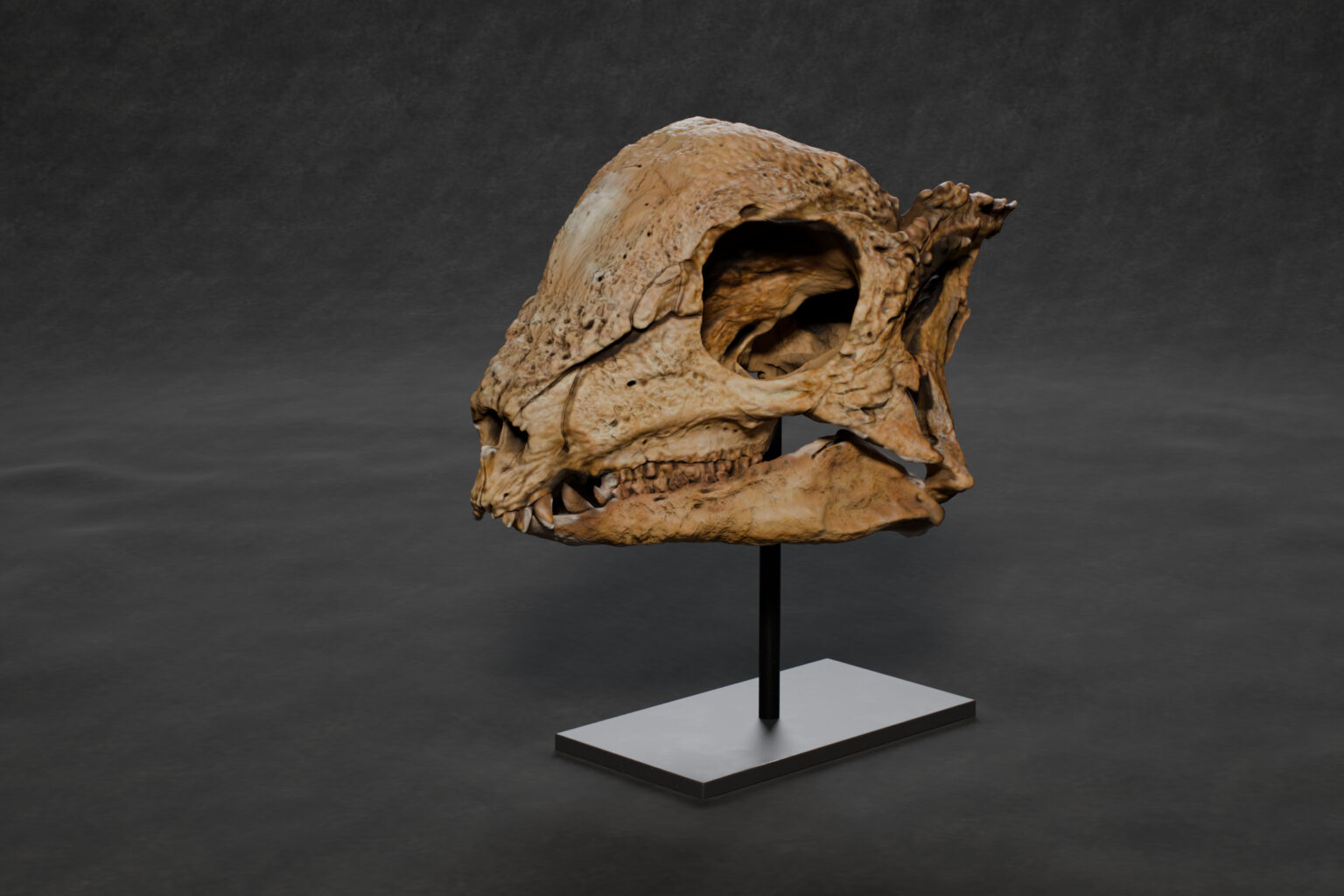
This Zavacephale skull STL is a life-size model of the only known skull of Zavacephale rinpoche, a small dome-headed dinosaur from the Early Cretaceous of Mongolia. I sculpted it from the photographs of the fossil and the figures in the 2025 description. It’s 163 mm long, it sits in your hand, and it’s the oldest pachycephalosaur skull anyone has found.

About Zavacephale
Zavacephale rinpoche was described in Nature in September 2025 by Tsogtbaatar Chinzorig, Lindsay Zanno and their colleagues. The skeleton came out of the Khuren Dukh Formation in the eastern Gobi. It’s Early Cretaceous, which puts it about 15 million years before any other pachycephalosaur. Every other member of the group is Late Cretaceous.
It’s also the most complete one. The holotype, MPC-D 100/1209, is more than half a skeleton: the skull and lower jaw, a hand, the whole tail wrapped in ossified tendons, and a cluster of stomach stones. Nobody had found a pachycephalosaur hand before.
The animal was young and still growing, a bit under a metre long and around 6 kg. The dome was already fully formed, though, and that’s the interesting part. The headgear grew up faster than the body, so these animals were probably using it well before they were adult.
The name means roughly “head origin, precious one”. Rinpoche is Tibetan for “precious one”, because the dome was found sticking out of a cliff like a polished stone.
What is in the Zavacephale skull STL download
- 163 mm long, 117 mm tall and 110 mm wide with the jaw in place. 1:1, life size for the holotype.
- 2 STL files: the cranium and the lower jaw
- Closed, watertight shells at 1:1 in millimetres. Import at 100%, no rescaling.
- Nothing thrown away: the cranium is 21 million triangles, about 1 GB, and the jaw 5 million. If your slicer struggles with the big file, reducing it to around 5 million triangles loses nothing a printer can show.
- No supports in the files, on purpose. Where they go depends on your printer and how you stand the part, so that call is yours.
Printer size you need
Two parts, and the cranium sets the size. Turned to its tightest orientation it’s 157 × 106 × 104 mm. The jaw is 121 × 105 × 31 mm.
FDM. A 180 × 180 mm bed with 180 mm of height takes the cranium comfortably, so a Bambu A1 mini or a Prusa MINI will print it, with the jaw on a second plate. On a 220 × 220 mm bed like an Ender 3 both parts fit on one plate, just. A Bambu A1 or P1S or a Prusa MK4 takes them together with room to spare.
Resin. The cranium needs a 10-inch class printer. Its two smallest sides are 104 and 106 mm, so the plate has to be at least 110 mm deep. An Anycubic Photon Mono M7 Pro (223 × 126 mm) or an Elegoo Saturn 4 Ultra 16K (212 × 118 mm) takes it tilted along its length. A 7-inch machine like the Elegoo Mars 5 Ultra (153 × 77 mm) is too narrow for the cranium; the jaw does fit on one, standing on edge.
Printing the Zavacephale skull STL
The detail on this skull is small. The cheek teeth are a few millimetres tall and the texture on the dome is finer than that, so it rewards a fine setup more than a fast one.
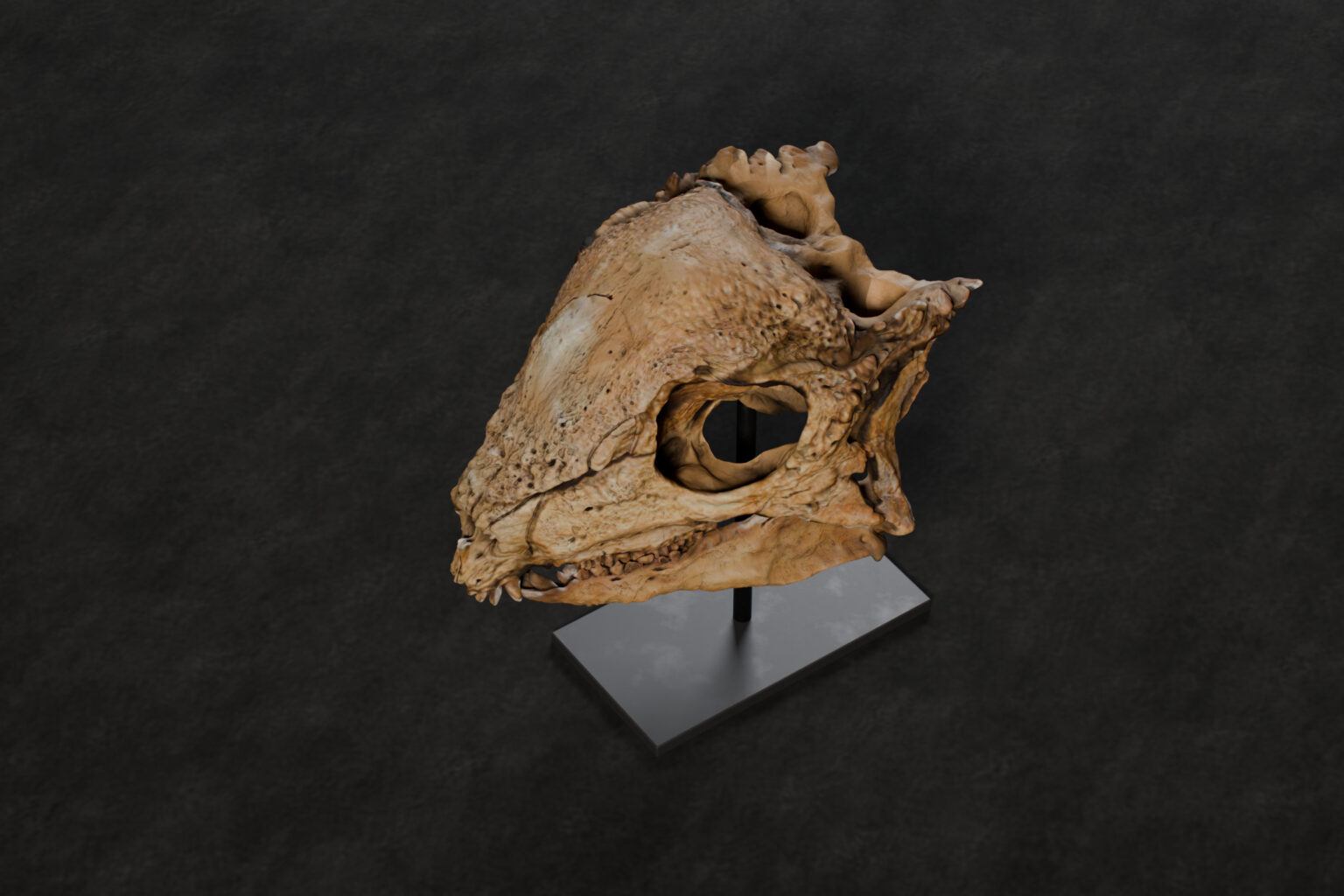
FDM. It prints on a 0.4 mm nozzle, but a 0.2 mm nozzle keeps the teeth. Layer height 0.08 to 0.12 mm, three walls, 10 to 15% gyroid infill, PLA or PLA+. Stand the cranium the way it sits on the stand: the dome then builds up without any support, and tree supports go under the palate, in the orbits and behind the cheeks. The jaw prints teeth-up with supports under its lower edge.
Resin. Layers of 0.05 mm. Hollow the cranium to a 2.5 mm wall with two drain holes in the underside of the skull. Solid it takes about 330 ml of resin, hollowed roughly half that. The jaw is thin enough to print solid. Tilt the cranium along its length with the back of the skull toward the plate, so the supports land on the skull base and the back of the head and stay off the dome and the face.
Putting the jaw on
No pins and no pegs. The jaw meets the cranium at the two jaw joints at the back, and that’s where it’s glued. Dry-fit it first, then a drop of CA glue on each joint and hold it for a minute.
The stand in the pictures is a single 6 mm rod going up between the two halves of the jaw into the skull base, just behind the balance point. There’s no socket for it in the file, so drill one after printing if you want to mount it that way.
Licence
Copyright Nova Studios. This Zavacephale skull STL is sold for personal use only. You can print it for yourself as often as you like. You may not resell or share the files, sell printed copies, or print it for other people as a service. Commercial licences are available on request.
You must be logged in to post a review.


Reviews
There are no reviews yet.